
Everyone has seen, by now, the iconic image of Jordan Salinas at In-N-Out. Hopefully you saw the original, taken from the recorded video, and not one of the AI filtered enhancements. Jordan is seen shooting towards the In-N-Out attacker at a controlled pace, recorded from afar by an observers phone. He is credited, along with two others who deliberately intervened, with breaking the shooter’s momentum and ultimately leading the shooter to self select out of life in the nearby field.
I’m still uncertain if we know if anyone hit the shooter, even non-fatally, of the two who have been reported to have engaged him. While that would have been a more ideal and had a more direct effect, the countering force in this incident did it’s job. That short clip, well circulated at this point, is illustrative of a defensive foundational pillar that cannot ever be addressed in strong enough terms. The will to act.
Do Something
Advertisement — Continue Reading Below
Do something. Get off the X. Break contact. Defensive mindset. Combat mindset. Fighting mindset. Survival mindset. Emergency action plan. ‘Move, bitch. Get out the way.’ I can keep typing increasingly comical names for slideshow slides until my publication deadline hits, but they all start with the will to act. You must choose to act. Not wish to, choose to.
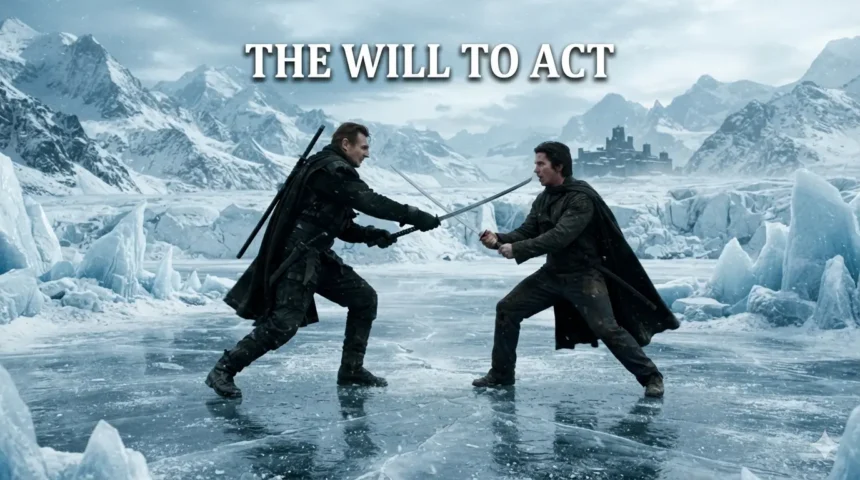
It is my absolute favorite scene in Batman Begins. Liam Neeson, though ultimately the antagonist, harshly admonishing Christian Bale that the man in the alley being armed and the fact the Bale’s Bruce Wayne has had training are not excuses for why his father didn’t act.
One of the points in the scene easy to miss, and one that Neeson’s Ra’s al Ghul is deliberately distorting for his ends, is the fact Thomas Wayne does act. He acts when his wife and son are threatened directly, but he and she are killed. Ra’s distorts this into cowardice and inaction in an attempt to influence Bruce into greater aggression against the criminal elements, unsurprising since the DC League of Assassin’s thinks and has used genocide as a ‘perfectly sensible’ counter before, and try to do it to Gotham in the film.
Advertisement — Continue Reading Below
Thomas Wayne’s will to act, his legacy, his choices, all ultimately anchor Bale’s Bruce Wayne in a way Neeson’s Ra’s al Ghul fails to overcome and radicalize, although he get’s close. It is a poignant message about the complexity and depth of such things we often think of as clear cut.
That choice, to act, can be terrifying. It carries no certainty of safety or efficacy, Thomas Wayne’s example shines therein. We can find countless real world examples too of people who acted but did not survive or achieve the desired outcome. We need look no further than an ambulance or injury scene where CPR doesn’t work. The only certainty we take is that in not acting you are being acted upon, by people, by nature, by the world as it exists for you in that moment.
Things are happening to you and around you. You must exert your will back upon them.
Advertisement — Continue Reading Below
Do Something Right
One of the central conflicts of Batman Begins is whether or not what Thomas Wayne did was right. The Monday morning quarterbacking we do on police cam footage, surveillance footage, or other defensive reporting often circles around this same question.
I would argue what Thomas Wayne did was right. What is wasn’t, was effective. Thomas’ line in the sand, his trigger point, was if Martha or Bruce were threatened directly. When that trigger came he attempted to shield Martha and Bruce. The robber panics, shooting Wayne fatally. Martha screams, the robber continues to panic, and shoots and kills Martha. He then flees. The robber, Joe Chill, portrayed brilliantly by Richard Brake, is shown remorseful and the remorse comes off as genuine as I believe it is intended. Chill is killed by Gotham’s organized crime (Falcone) right before Bruce was about to attempt the same.
The movie’s conflict with right continues to escalate from there with Bale going on the intercontinental journey that lands him training with the League and his later escape when he refuses to kill a criminal in cold contextless blood.
Advertisement — Continue Reading Below
That choice, the moment of action, is where events get very uncertain and training helps immensely. If this is a violent encounter, you’re in direct opposition to someone or a group who are trying to harm you or another (e.g. assault). Alternately, they are willing to harm you or others if things do not go there way (e.g. robbery). It is your will, your decisions, their effects, and the countering decisions from the opposition. All this is in motion simultaneously. Each choice will provoke a reaction. Those choices need to keep being made until one of the end results you can live with/through is achieved.
This in an environment that can throw new variables in at any moment of the conflict. Those new variables can be helpful, harmful, interfere with both, or complicate it in a completely new way. Your will to influence the situation positively must remain. This could result in changing what you are doing when a new variable comes into the situation. It is rapidly explosively evolutionary. The decision to draw and fire can change in an instant. The decision for you to grab your family and run could instantly become the best from initially being far too dangerous.
You must set your brain in gear to keep making decisions.
Advertisement — Continue Reading Below
Remember, if you had to ask, “Who’s in charge?” You are in charge
This goes for most emergency circumstances, not just a violent encounter.
Car crash, fire, flood danger, house collapse, storm risk or damage, evasion, shelter.
You are and will remain the best person to positively influence your situation unless you are fully disabled or entirely in the care of higher authority.
Advertisement — Continue Reading Below

We have an extremely competent professional emergency response presence in this country. Fire, police, EMS, all with a high degree of training and good equipment to respond to a plethora of situations. We nonetheless see their limitations and outright failures called out in media every single day. Their response times, their decisions, their knowledge of the situation you are in and have direct influence upon is significantly hampered and will need to be caught up to have positive effect.
You can wait, accept the risk each moment of the wait, and then the risks while the professionals close the information gap. Or, as I recommend, you can act. You can positively influence your situation, directly enact your will upon it, and stack as many of the odds as you can touch back into your favor.
Act accordingly.
Read the full article here