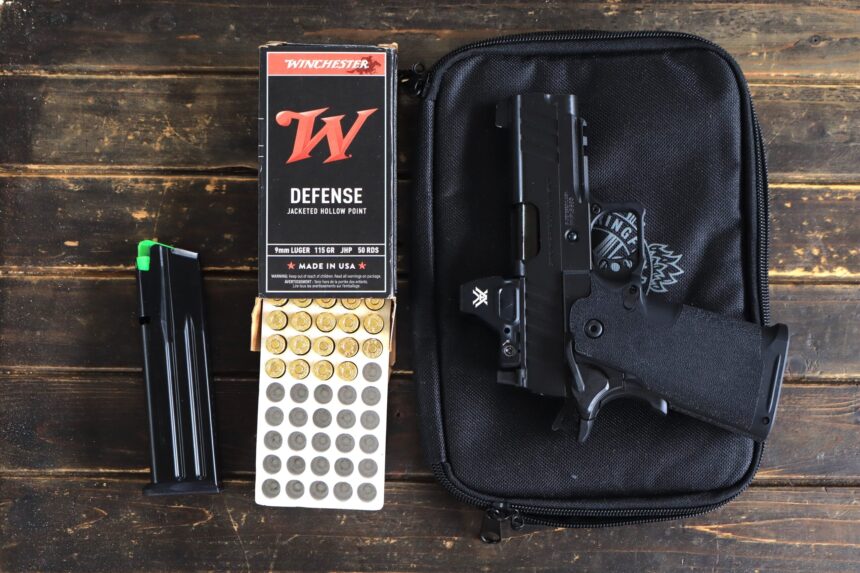


I had little interest in double stack 1911 designs. I always chalked up the concept to some desire to have your cake and eat it too by converting something meant for competition to lifesaving gear. As a fan of the traditional single stack 1911, I didn’t get the appeal of making it fatter and in a softer shooting caliber. There is also the issue of using single action pistols once again when the world has moved onto spongier designs more forgiving of small mistakes. Not to mention the fact that manufactures are not giving these pistols away. But then this new Springfield Prodigy arrived to change my mind.
Over the last few years, the Springfield Prodigy has brought the double-stack 1911 concept from competition to the everyman with the ideal mix of features at a price point that can’t be balked at. In addition to their full-size 5 inch barreled pistol, the Prodigy is also available as a compact carry handgun with a 3.5 inch barrel. The latest Prodigy 1911 DS model has the full-size grip of the original with its eighteen round capacity while retaining the compact slide and barrel for ease of carry.
Advertisement — Continue Reading Below
Features
Like its competition, the Springfield Prodigy is a mix of traditional and modern features. This model takes the concept a step further by completing the crossover concept of coopting different slide and grip configurations to give the shooter a choice for carry. In the case of the new Prodigy 3.5 inch, it is the full-sized polymer grip frame and its longer eighteen-round MecGar magazines and the shorter 3.5 inch bull barrel and accompanying slide. This configuration is ideal for those who do not want to sacrifice capacity, but need comfort–particularly when paired with an IWB holster.
Polymer Crossover Meets 1911
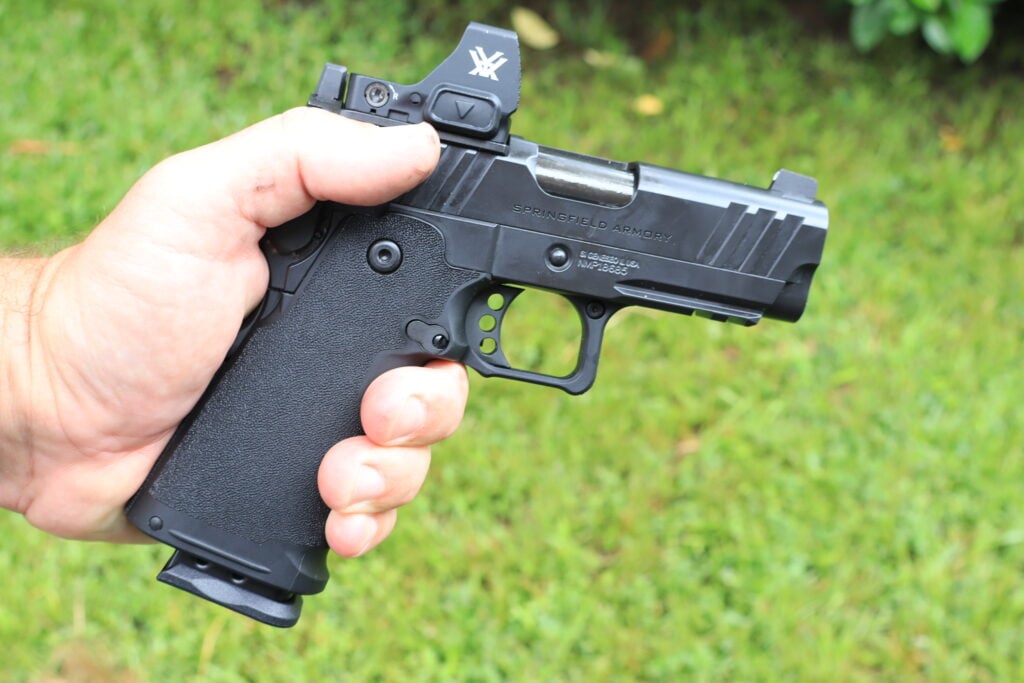
Mechanically, the Prodigy has the same familiar grip angle as a traditional 1911. The extended grip safety, thumb safety, magazine release button, and slide release further channel that design. However, the magazine release is proud and reversible. The thumb safety is also ambidextrous. The GI guide rod and barrel bushing assembly is traded in for a full-length guide rod and a target crowned bull barrel that achieves a tight lockup with the slide.
Advertisement — Continue Reading Below
The slide itself is carbon steel and is finished in a black cerakote. It comes with forward and rearward cocking serrations as well as an optics cut that modern shooters expect. The Prodigy uses Springfield’s AOS system of plates that will work with any optic on the market. The plates have an integral rear sight that allows for an effective co-witness between the iron sights and an optic. On their own, the iron sights are solid–a black serrated steel rear notch and a tritium dovetailed front sight.
The black anodized aluminum lower frame has a two-slot Picatinny rail for a weapon light and is mated to a polymer grip frame. The grip frame is gently stippled and has a smooth undercut under the trigger guard for the shooting hand. The grip frame has a generous flare for rapid reloading but is provisioned for aftermarket magazine wells.
On The Trigger
The trigger is a rounded and serrated aluminum unit fitted with an overtravel adjustment screw. The pistol has a Series 70 style sear arrangement, which affords a clean 3 lb. trigger break. As with most 1911 handguns, the Prodigy’s trigger has a few millimeters of takeup before a definitive break. Smartly, Springfield uses a titanium firing pin in the Prodigy to make the pistol drop safe. The reset is modest, as the trigger return spring is neither sharp nor weak.
Advertisement — Continue Reading Below
Disassembly Notes
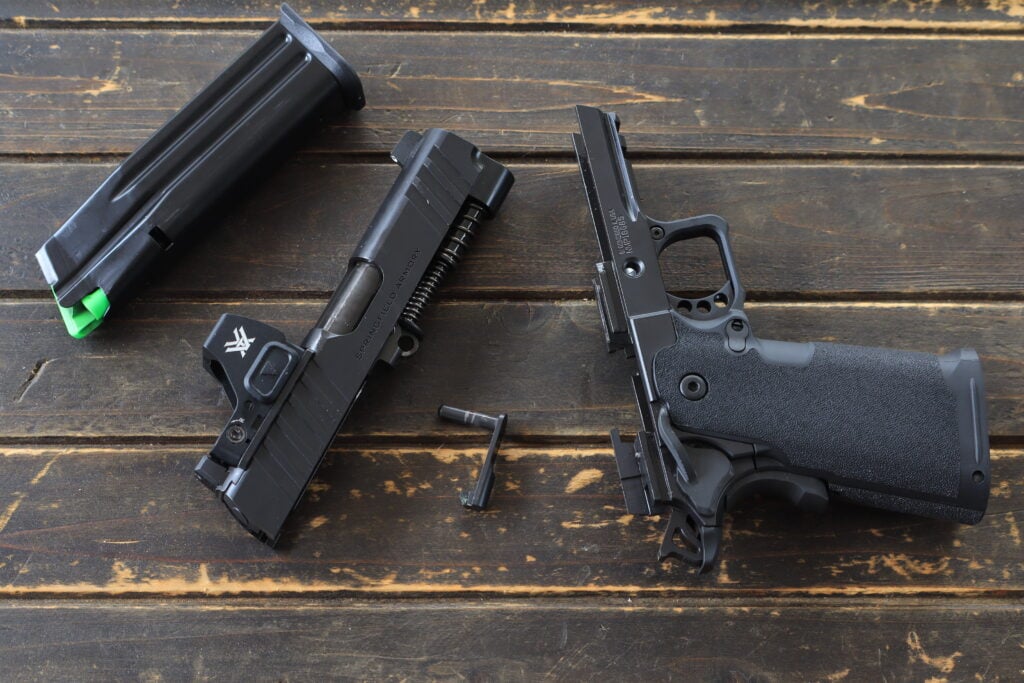
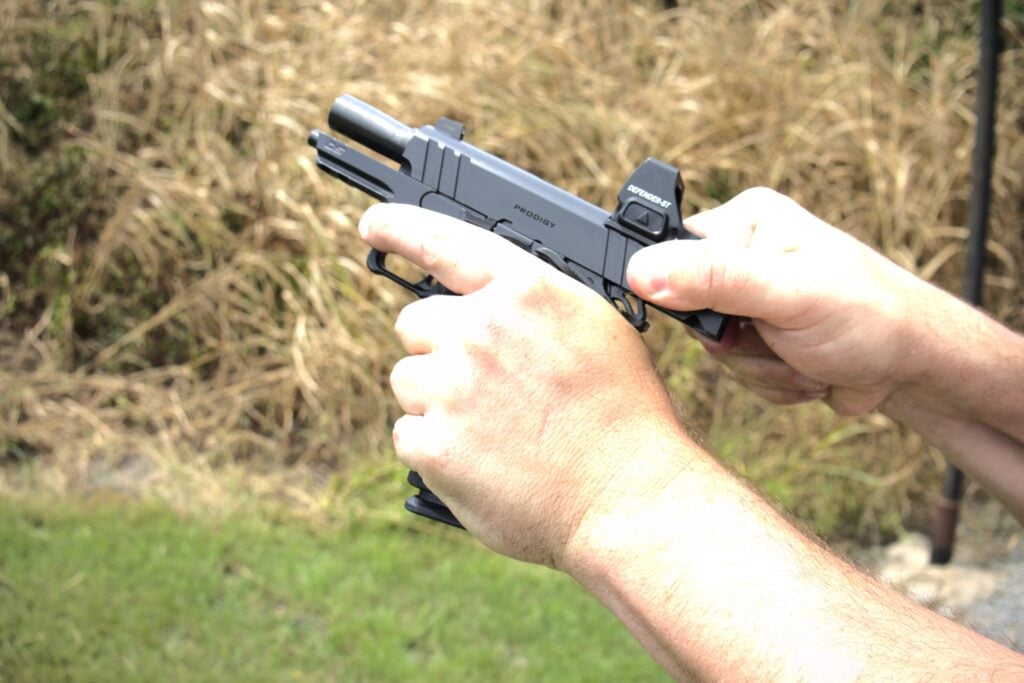
The 1911 DS Prodigy features a full length guide polymer rod and a bull barrel to achieve lockup. Disassembly is accomplished by removing the slide stop from the frame with the slide drawn to the rear to the disassembly notch. The right side of the slide stop is flush with the frame, so a punch is handy to drive the stop out from that side.
With the slide off the frame, a half-moon tool is needed to remove compress and remove the guide rod, which in turn frees the barrel from the slide.
Advertisement — Continue Reading Below
Shooting Impressions
Double stack 1911s are meant to be a marriage of 1911 ergonomics with greater capacity in the softer shooting 9mm cartridge. These pistols are meant to be shooters on easy mode. The Prodigy 1911 DS from Springfield Armory might be on the lower end when it comes to price, but it generally delivers on the promise.

I consider this version of the Prodigy to be a carry gun, rather than a competition model. It trades compensaters and ports for a compact slide that excel at reducing discomfort while carrying IWB, while the full-grip delivers real estate to get a firing grasp on the pistol and keep your hand in place under recoil. The enlarged gas pedal-type ambidextrous safety provides an easy place for the shooting thumb and helps to dissipate what little muzzle climb the Prodigy has.
Advertisement — Continue Reading Below
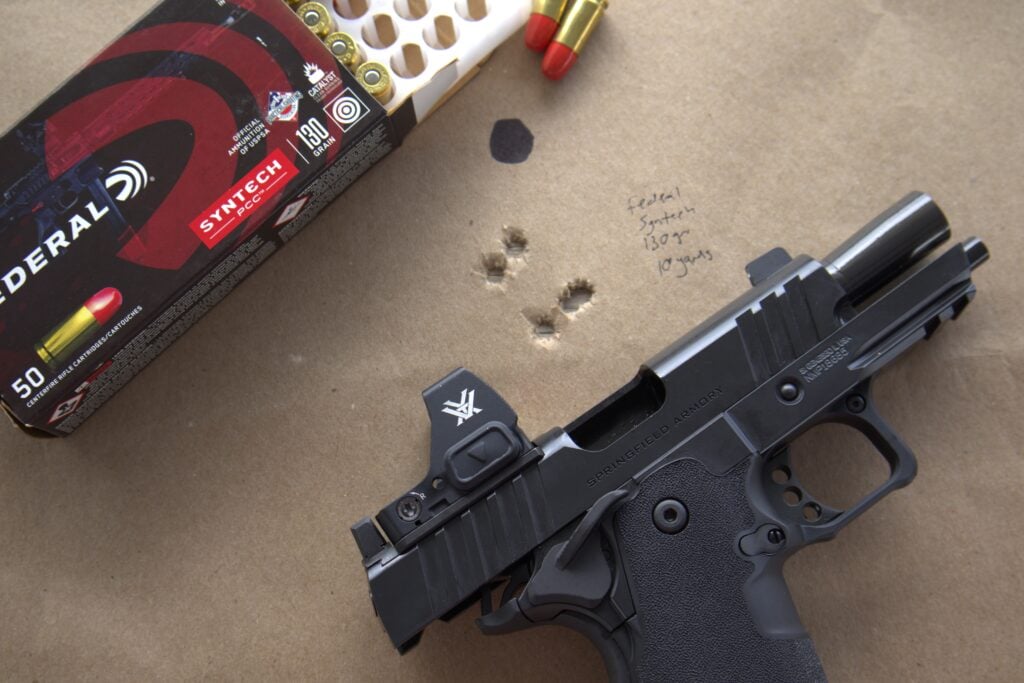
The compact slide and bull barrel do not throw off the balance of the pistol and it shoots comparative to a full-sized all-steel pistol, despite a 1 lb. 14 oz. empty weight. That, combined with the no-compromises trigger meant that I had to actively try missing a two inch group at ten yards on paper–or lob a round out of the head portion of a 1/2 sillouette at thirty yards.
Advertisement — Continue Reading Below
The Bottom Line
If a single action pistol with manual safety is in your wheelhouse, the Springfield Prodigy is a worthwhile take as a carry gun. In my three hundred round test, it was utterly reliable and there were no ergonomic issues to speak of. With that said, the crossover category of handguns is subjective from a carry perspective. The Prodigy is weighted right to be competitive with other compact pistols and its shorter slide will reduce the dig into your side after a long day’s night, but that longer grip may print more–depending on how you dress. But on its merits, this compromise of a handgun is still a shooter.
Read the full article here