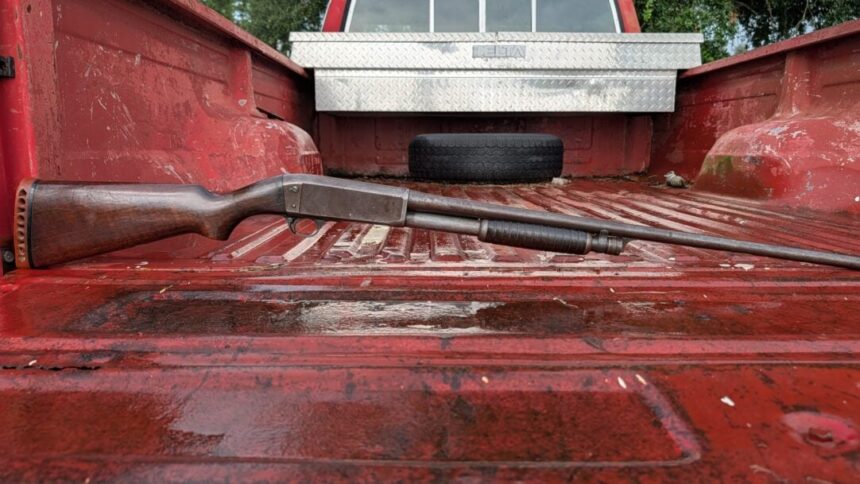


I wonder what would have happened to the Winchester Repeating Arms Company if they hadn’t had their fallout with John Browning? In 1903, Winchester and John Browning parted ways, and Browning would go on to license his designs to various companies in different countries, resulting in some interesting and unique guns. Guns like the Remington Model 17.
The Remington Model 17 didn’t just benefit from the mind of John Browning, but also from John Pederson. While most people are familiar with Browning, Pederson often gets overlooked. John Browning called Pederson the “greatest living arms designer, and probably the greatest of all time.”
Advertisement — Continue Reading Below
While it’s romantic to picture Browning and Pederson side by side in Remington’s factory, that wasn’t the case.
John Browning patented a pump-action shotgun with a tubular magazine that would eject and load from the bottom. The original patent dates back to 1915, and Remington purchased the rights to build the gun, but that pesky Great War didn’t give them the time or need to build the new shotgun. Well, after the war was over in 1921, Remington began producing the new shotgun.
Prior to the gun’s production, John Pederson came in and made a few design changes, as did G.H. Harrison. This would become the Remington Model 17.
Inside and Out: The Remington Model 17
Remington produced the Model 17 only in 20 gauge. Why 20 gauge? They already had a 12-gauge, the Model 1910, which had gained some fame in World War 1. Why produce two 12-gauge guns and compete with yourself? Plus, there was a shortage of 20-gauge pump-action guns out there; it seemed like an open market.
Advertisement — Continue Reading Below
The gun has a slab-side design and lacks a side ejection port. The design has some benefits. If you were in a duck blind, the shells wouldn’t be tossed at your fellow hunters. The lack of an additional ejection port keeps dirt and debris out of the gun, and in an era of paper shells, it probably helped keep moisture out too.
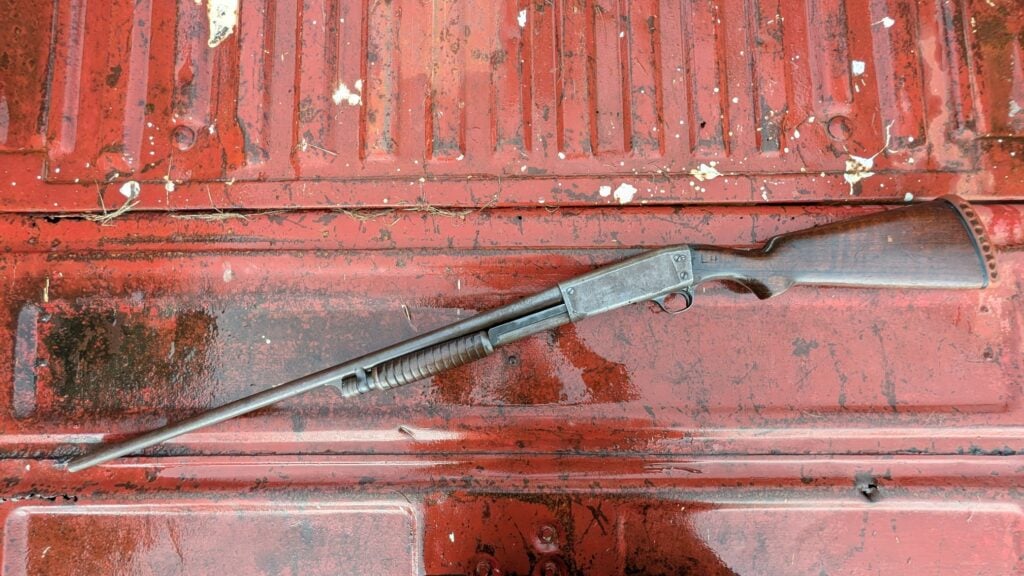
As a 20-gauge gun, it was excessively slim and trim. The full-length models with 30-inch barrels only weighed about 5.8 pounds. Not a terrible setup overall. It was wieldy, easy to shoot, and lightweight, what’s to hate?
The Model 17 used an internal hammer as well as a twin-forked carrier. The gun uses a tilting bolt, which makes it quite strong and durable. The bolt locks against the receiver, ensuring it stays in place against recoil forces until the user decides to pump the action.
Advertisement — Continue Reading Below
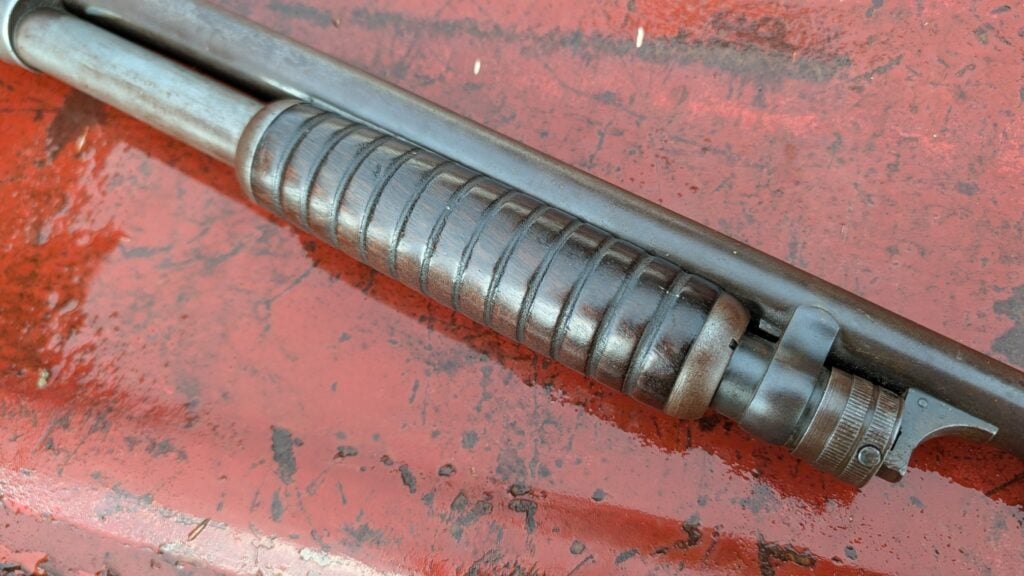
The gun has a five-round tubular magazine, which became and remains the standard. The gun could chamber both the older 2.5-inch rounds and the more powerful 2.75-inch rounds. Of course, it’s unwise to shoot steel shot through any of these guns these days.
A Detour For the Model 17
I do want to mention that while the vast majority of the 73,000 guns were basic sporting models, Remington also produced Riot gun designs. The 17R used a shorter 15.1-inch barrel and came in both standard-stocked models and with a cut-down pistol grip. The cut-down pistol grip variants were produced as the Model 17R Special Police.
My Model 17
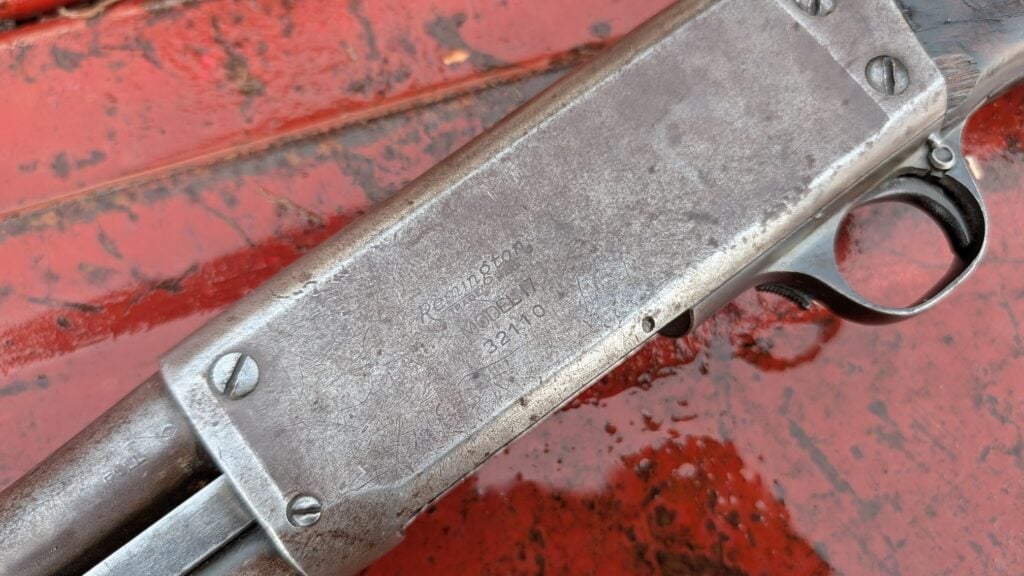
Even though this shotgun is over a century old, the Model 17 isn’t too far from a shotgun you’d find today. The controls are simple and easy to manipulate. We have a pump-release on the front of the trigger guard, which is easy to access with the firing hand.
Advertisement — Continue Reading Below
Behind the trigger guard sits a simple cross-bolt safety. This design could be fielded today, and it would be at home on any modern shotgun.
The Model 17 is often labeled a takedown shotgun, but it doesn’t share the same takedown design as shotguns from the same era. The barrel is removable, but the magazine tube is not. To remove the barrel, you loosen, rather than tighten, the magazine cap. The magazine cap presses the barrel forward, creating tension and locking the semi-threaded barrel into the receiver.
The Model 17 might be ancient, but it still shoots quite well. I don’t torture this thing too much, but it rarely has problems. Every so often, a round may fail to feed to the carrier the first time, but it’s over a century old, so I give it some grace.
As long as the magazine doesn’t fail to feed, the gun always goes bang. It throws shells downward in a neat little pile while shooting.
Advertisement — Continue Reading Below
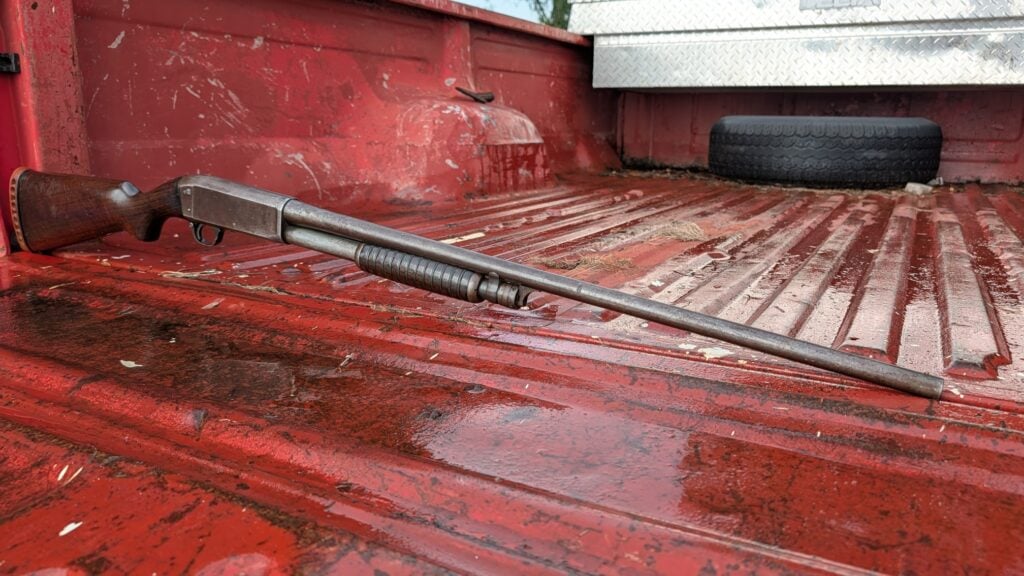
The Model 17’s lightweight design works against it when it comes to recoil. I swear it’s almost on par with a 12-gauge when shooting buckshot. The light design does make it nice to swing and easy to shoot.
The action is incredibly smooth. It’s fast and a ton of fun to cycle. There is some soul to it and a smoothness we get from craftsmen making shotguns rather than them being mass-produced on machinery.
The Model 17 – A Legacy
People don’t mention the Model 17 in the same vein as the Model 12 or the Winchester 1897, but it has a remarkable legacy. Guns like the Ithaca 37 and the Browning BPS all directly descend from the Model 17. Guns like the Remington Model 31 were inspired by the Model 17, which would lead to the 870 and Mossberg 500.
The Model 17 planted the seeds for trees that would provide shade it would never enjoy.
Advertisement — Continue Reading Below
Read the full article here