
Let’s be frank, rifles do not come ready out of the box. The modern carbine needs to be properly accessorized before it can serve. Many accessories are truly optional, nice to have but truthfully unnecessary. A few, however, are requirements if the carbine is being used in a serious capacity. Here are my five my important things to add to your rifle once you unbox that smoke pole.
Serious in this context will mean duty or defense, specialized competitive builds will be subject to the rules of their game.
1. Optic
Advertisement — Continue Reading Below
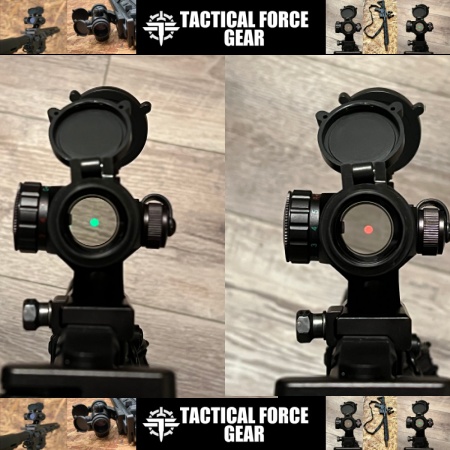
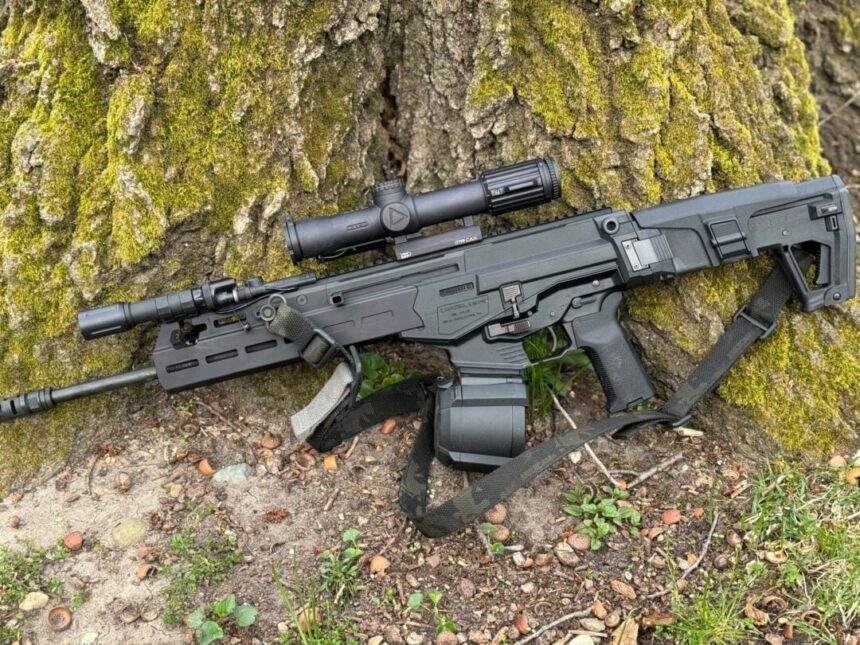
I’ve said it in one way or another in every rifle class I’ve taught, I grew up on iron sights and I think they still have value. But optics are an advantage that cannot be overstated. A properly mounted optic is properly aligned to the bore already and presents, at the least, a finer aiming point than irons ever can.
I do the math whenever I am teaching soldiers, some who still cling to the old ways (I get it, I had an M16A2 too). The M16 Front Sight Post (FSP) covers shoulder to shoulder on a typical silhouette target at ~150 yards. On an M4 that ratio gets even worse because the front sight is closer. You’re staring at a roughly 14 MOA (+/- up to 4 MOA) sight that you cannot see beneath. Suboptimal.
Compare that to any decent commercial/mil dot at 2 MOA. Covering a roughly 3 inch spot on that same target 150 yards away and being able to see all directions around the point of aim to a much greater degree. The optic is always properly aligned once secured and zeroed, there is effectively no ‘sight alignment’ component. If you can see it you are properly aligned*.
Advertisement — Continue Reading Below
*(with certain niche exceptions like lens edge parallax or improper parallax setting on a precision optic)
With magnified optics the sight picture information provided to the shooter just improves, period. The LPVO revolution of the last decade has brought out a tremendous amount of efficiency and corresponding range in rifles. There is a common anecdote from GWOT about Marines being investigated for war crimes based upon the number of head shots they were achieving with TA31 ACOGs. LPVOs are unequivocally the best modern general purpose optical option.
Every parallel study of new shooters given optics beside irons show optic shooters with quicker gains in the fundamentals and higher hit percentages.
Advertisement — Continue Reading Below
Get an optic.
2. Sling*
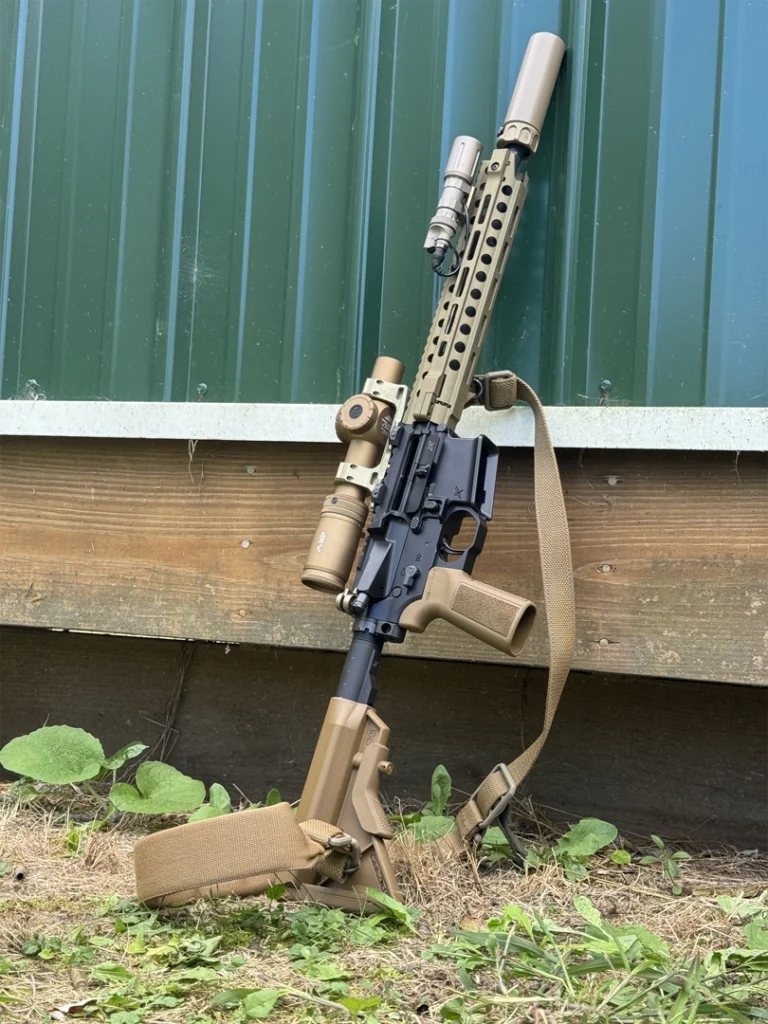
The military took far too long to adopt good slings, but they have now. Adjustable two point slings are versatile and make your life indispensably easier. Pistols have holsters. Long guns have slings.
Advertisement — Continue Reading Below
Quick detach?
Yes, under most circumstances QD points, at least one, are preferable to quickly extract yourself from your rifle under an emergency. They also just make life substantially easier logistically.
Get a sling.
Advertisement — Continue Reading Below
*If your agency requires that you use irons sights a sling becomes the next priority
3. Light
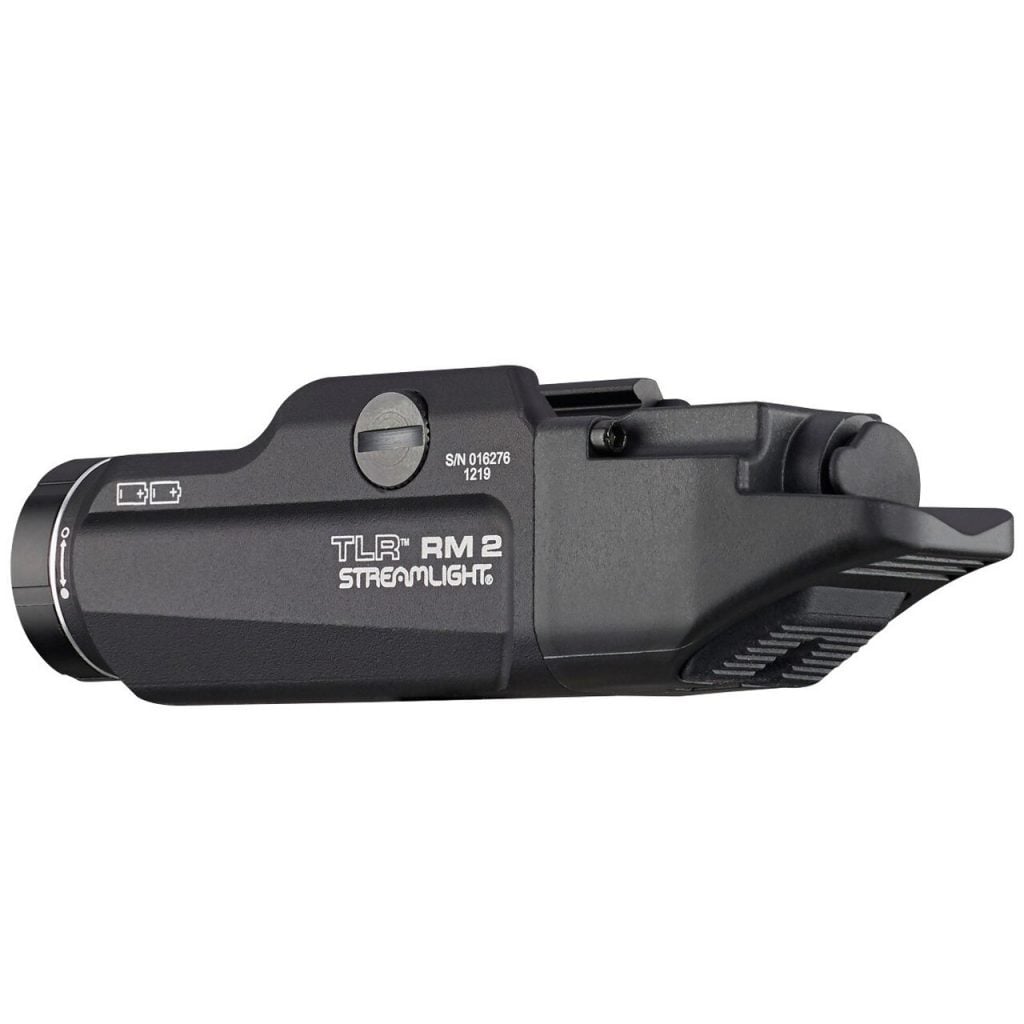
White light is your friend. White light gives you information. White light can deprive your target of information. Have a white light.
Advertisement — Continue Reading Below
“But it will let them know where…”
Shush with that nonsense. You’re likely fighting in your house, not hundreds of meters away across a field or sneaking through a dense wood. Low light signature is not high on your priority list here, positive target ID is. Positive ID is a line between you and prison.
Oh, and if you happen to be in a situation where firing the light would be bad. You can just not fire the light. Many of these lights have lockouts too, the RM2 from Streamlight there being one such light, so you can physically disable it from draining the battery, firing and cooking your gear, or giving you away inopportunely.
Get a light.
4. Seven (minimum) reliable magazines
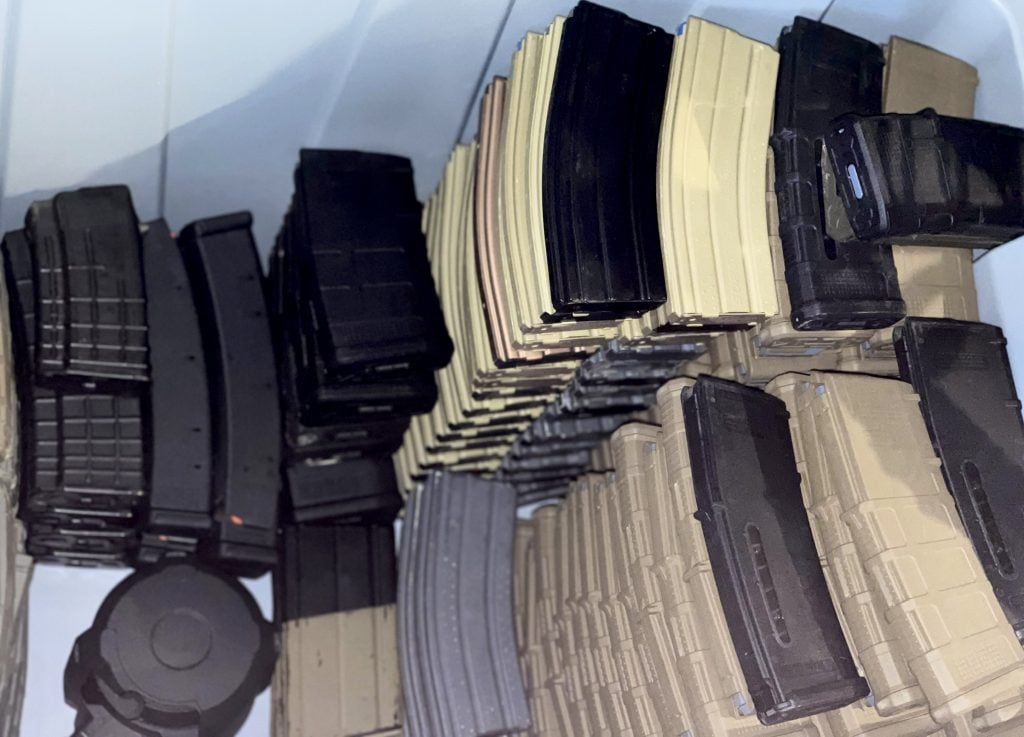
Magazines are the core of care and feeding your rifle. I recommend that serious use ‘duty’ magazines get loaded and then set safely in their place to be ready. They should get inspected on a regular cycle for cracking or other wear, and otherwise they are not messed with, ever. They will last for years this way.
Use additional magazines for practice but leave the duty magazines be. If your duty load out is less than seven, then these spare additional magazines are immediate replacements if the need should arise. Most Patrol LE isn’t going to roll with seven magazines. Two, maybe three would be common. One on the belt and one in the rifle, maybe a spare clamped onto the rifle too. If you have a rifle plate vest with space you can easily add three or four spares here bringing you to a five to seven magazine total.
If that doesn’t get the job done, I am very very sorry about the day you are having.
Get good dedicated spare magazines.
5. Time on the gun
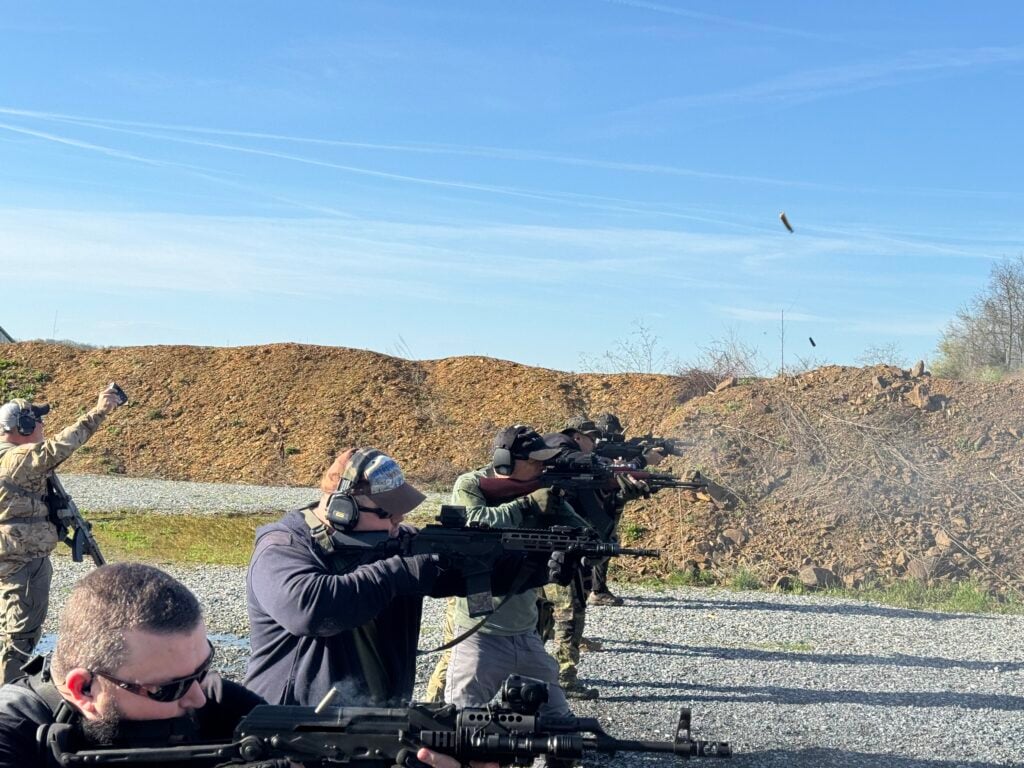
Not a single one the items further up this list will help you much if you aren’t going to spend some semi-regular time working the fundamentals. I teach this. I still train this with other instructors whenever the opportunity arises.
Foundational Mechanics > Tactics > Advanced Mission Concepts.
I need to learn how to run the gun without much thought before I can think about clearing a room. I need to clear single rooms before I crush a structure with a squad or do a multi-vehicle complex break contact counter-ambush.
In the words of Clint Smith, “Everyone needs to know how to work an AR-15 and an AK. Load it, unload it, and hit a pie plate on demand at 25 yards.” You might think that a simple request. You would be surprised. Even by so called and credentialed “qualified” armed professionals, that ‘simple request’ is lacking.
Get to a course. Get time on the rifle.
Make certain you have all five items. They make the rifle a tool worth having. Without them, it is probably a liability.
Read the full article here