
NEWYou can now listen to Fox News articles!
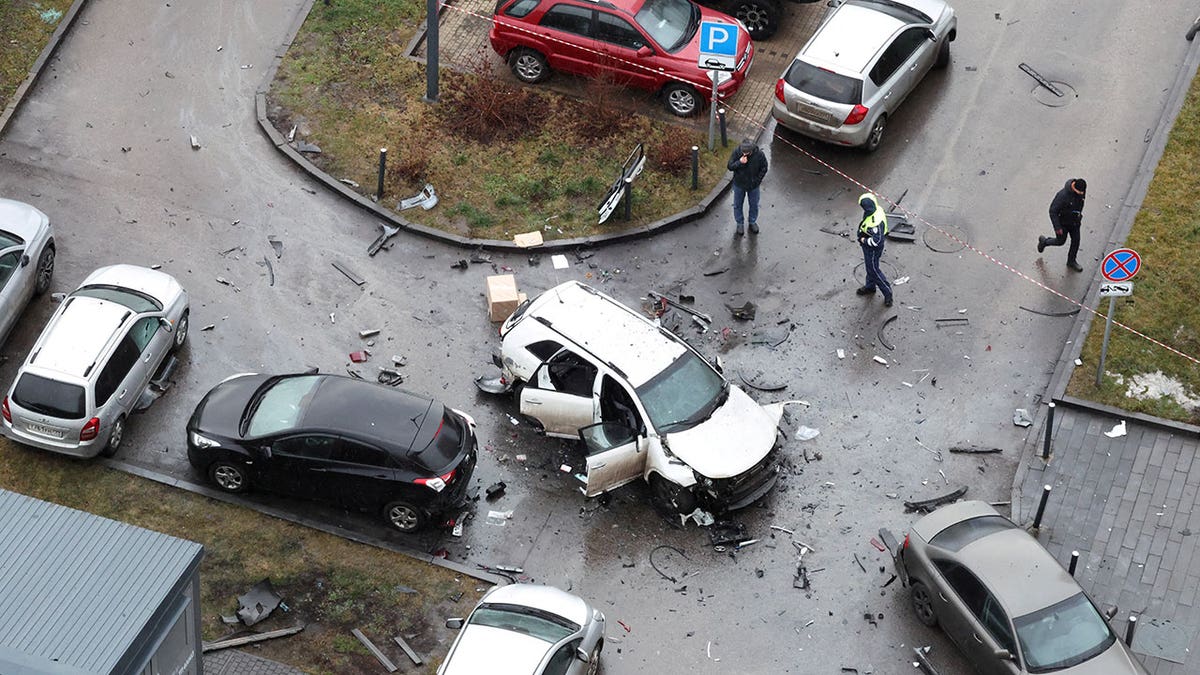
For the second time in little more than a year, a blast tore through the Moscow suburb of Balashikha, Russia, and left a Russian military figure dead.
On June 9, explosives planted under a BMW detonated as the driver began leaving a parking lot, according to independent Russian outlet The Insider. The outlet identified the man killed as Lt. Gen. Damir Davydov, a Russian Defense Ministry official responsible for supplying missiles and artillery ammunition to Russian forces fighting in Ukraine.
The location was striking. The explosion occurred roughly 1,150 feet from the site where Lt. Gen. Yaroslav Moskalik, deputy chief of the Main Operations Directorate of Russia’s General Staff, was killed in a car bombing in April 2025, according to the French newspaper Le Monde.
‘PURE HELL’ IN MOSCOW AS UKRAINIAN DRONES STRIKE MAJOR REFINERY SUPPLYING CAPITAL’S FUEL MARKET
Months before Moskalik’s death, another senior Russian officer was assassinated in Moscow.
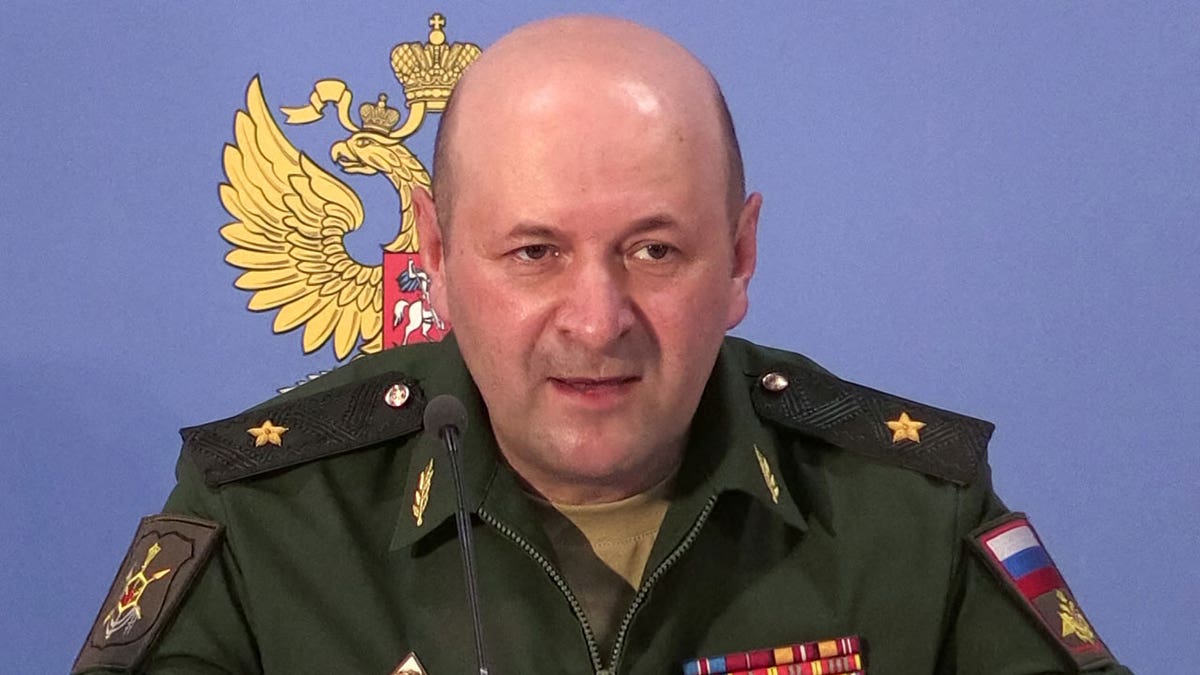
Lt. Gen. Igor Kirillov, the head of Russia’s nuclear, biological and chemical protection troops, was killed when a bomb hidden in an electric scooter exploded outside an apartment building. A source in Ukraine’s Security Service, known as the SBU, told Reuters the agency carried out the operation.
Together, the attacks are part of a broader pattern of assassinations and attempted assassinations targeting senior Russian military figures — a campaign that a European intelligence source says is now exposing tensions inside Putin’s own security system.
Since Russia launched its full-scale invasion of Ukraine in February 2022, senior Russian military figures have been killed in missile strikes, drone attacks, car bombings, crashes and frontline combat — a toll that, according to a European intelligence source, is now fueling internal tensions between Russia’s military and the FSB, Russia’s powerful domestic security service and successor to the Soviet KGB.
“There are internal frictions between Russian security institutions,” a European intelligence source told Fox News Digital. “The Russian military wants the FSB to guarantee physical protection for Russian generals, but the FSB is opposed to taking responsibility for the military.”
The dispute reflects a deeper rivalry inside Russian President Vladimir Putin’s system, where the security services have long held a privileged position over the armed forces, according to multiple sources.
‘PURE HELL’ IN MOSCOW AS UKRAINIAN DRONES STRIKE MAJOR REFINERY SUPPLYING CAPITAL’S FUEL MARKET
“This goes back to Soviet times,” the European intelligence source said. “The security services do not like the military, and the military does not like the security services.”
The central tension, according to the European intelligence source and Russian opposition figure Maxim Katz, is inside Putin’s own system: the war has elevated the importance of the military on the battlefield, while the political structure in Moscow still treats generals as a potential threat.
The result is a paradox for the Kremlin. Russia needs its military commanders to sustain the war, but the security services that dominate Putin’s system appear reluctant to take responsibility for protecting them.
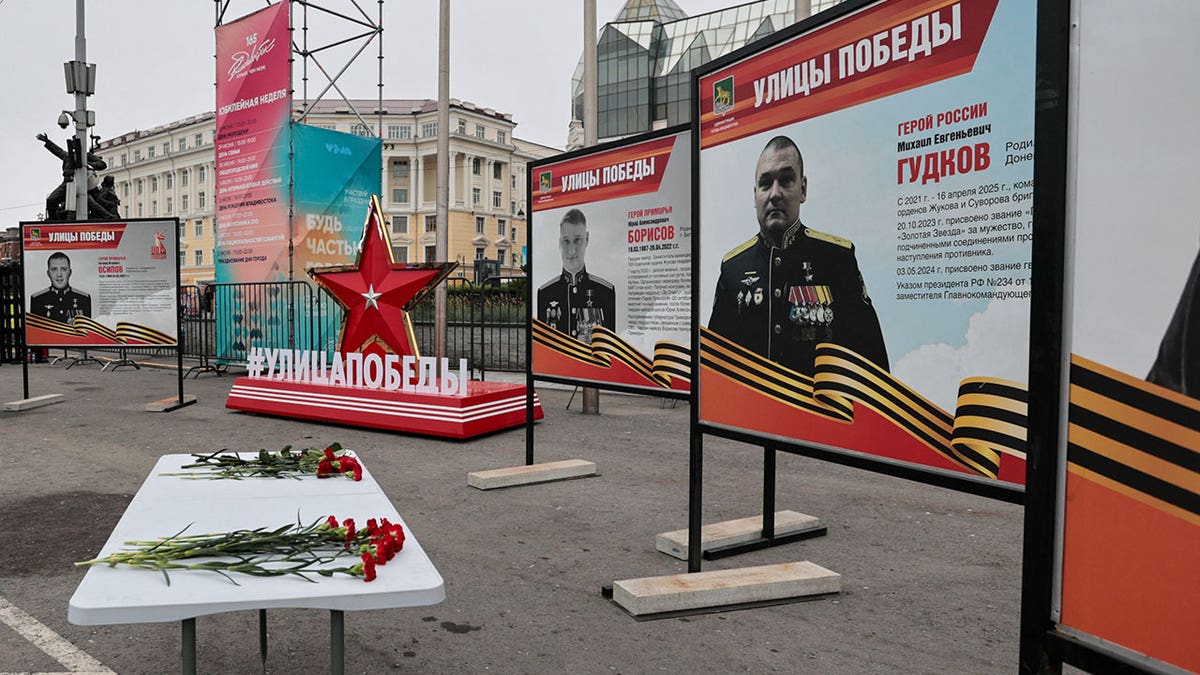
At least 15 Russian generals have been confirmed killed since the full-scale invasion began, according to independent Russian outlet Mediazona.
The toll includes five lieutenant generals, seven major generals and three former generals.
Some died far from Moscow, closer to the battlefield.
Lt. Gen. Oleg Tsokov, deputy commander of Russia’s Southern Military District, was killed in July 2023 in a Ukrainian Storm Shadow missile strike on the Russian-occupied city of Berdiansk. Maj. Gen. Sergei Goryachev, chief of staff of the 35th Combined Arms Army, was killed in June 2023 during Ukraine’s counteroffensive in the Zaporizhzhia region. Maj. Gen. Vladimir Zavadsky, deputy commander of the 14th Army Corps, was killed near Krynky in southern Ukraine in November 2023.
Others were struck inside Russia or in Russian-controlled territory.
Lt. Gen. Alexander Otroshchenko, a senior Russian air force commander, died in a military transport plane crash over occupied Crimea in March 2026. Retired Maj. Gen. Kanamat Botashev, flying for the Wagner Group, was killed in May 2022 after his Su-25 was shot down over Ukraine’s Luhansk region.
‘PURE HELL’ IN MOSCOW AS UKRAINIAN DRONES STRIKE MAJOR REFINERY SUPPLYING CAPITAL’S FUEL MARKET
The losses began in the opening weeks of the invasion of Ukraine, when Maj. Gen. Andrei Sukhovetsky, deputy commander of Russia’s 41st Combined Arms Army, and Maj. Gen. Vladimir Frolov, deputy commander of the 8th Army, were killed.
Katz said the military has long occupied a vulnerable position inside the Russian power structure.
“In Russia, the FSB is the biggest and most powerful security organization, and Putin himself comes from that system,” Katz told Fox News Digital. “The army, on the other hand, has always been viewed by these people as a threat.”
Katz said the Kremlin historically has feared popular military figures because the army is one of the few institutions with the capacity to challenge political power.
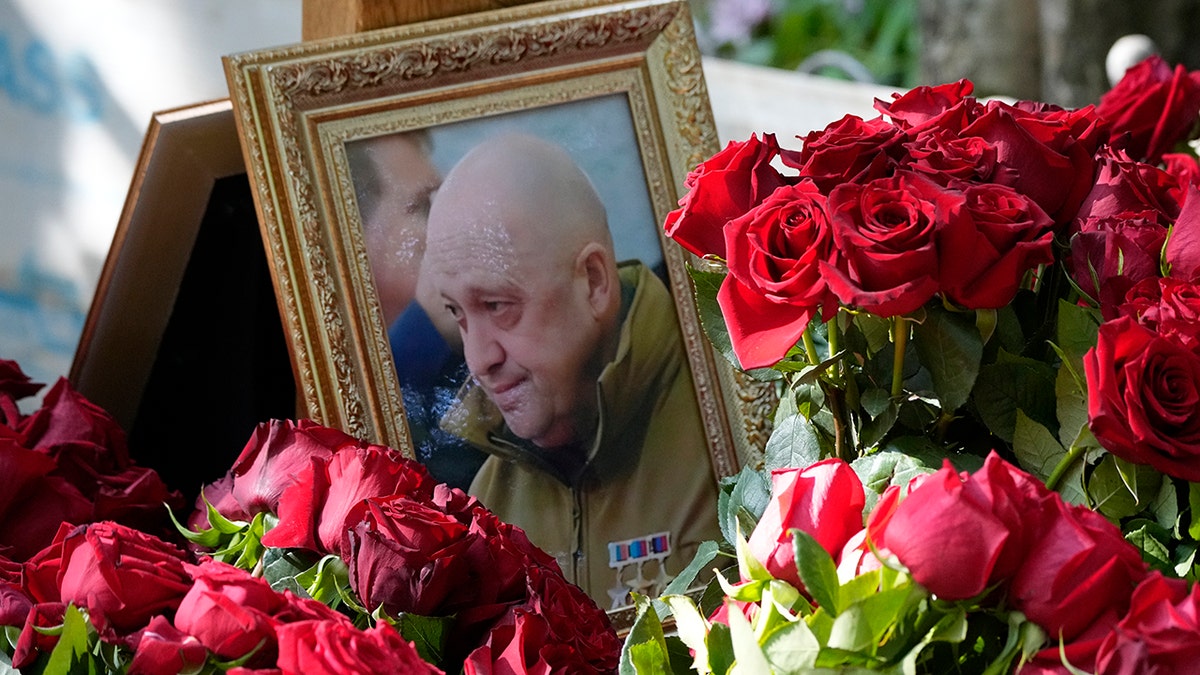
“You will not find Russian military men in senior government positions,” Katz said. “Since Stalin, they have been afraid of the army. Whenever there is a relatively well-known military figure with a name of his own, they deal with it somehow — legally, or like with Prigozhin, or like with other generals. In Russia, there is no such thing as a popular general.”
Katz argued that even during wartime, when the military might be expected to gain status, Putin’s system keeps the army politically weak.
“The army does not take part in decision-making,” Katz said. “It is funded now, but everything goes to the war. The generals are rich, but not like ministers or FSB people. Among the elites, they are the most deprived.”
UKRAINE LAUNCHES WHAT APPEARS TO BE ONE OF ITS LARGEST DRONE ATTACKS AGAINST RUSSIA: REPORT
That dynamic, Katz said, helps explain why Russian generals may not want the FSB responsible for their protection.
“For them, the FSB is a much bigger threat than the Ukrainian army,” Katz said. “The Ukrainian army kills a general once in a while. The FSB puts generals in prison much faster.”
The European intelligence source said the killings matter not only because of the operational losses, but because of the psychological effect inside the Russian army.
“Putin understands that losing prominent Russian generals can affect morale within the Russian army, which is already low from the Russian perspective,” the source said.
The apparent compromise, according to the European intelligence source, was to shift responsibility away from the FSB.
“The FSB did not want to deal with military protection, so the security service of the Russian presidential administration would take care of those generals,” the source said.
Katz said the internal pressure on Putin may also collide with Russia’s parliamentary elections in September — a moment he believes Western observers are largely ignoring.
RUSSIAN DRONES TEST NATO’S ARTICLE 5 DEFENSE GUARANTEE AHEAD OF FRIDAY SANCTIONS DEADLINE
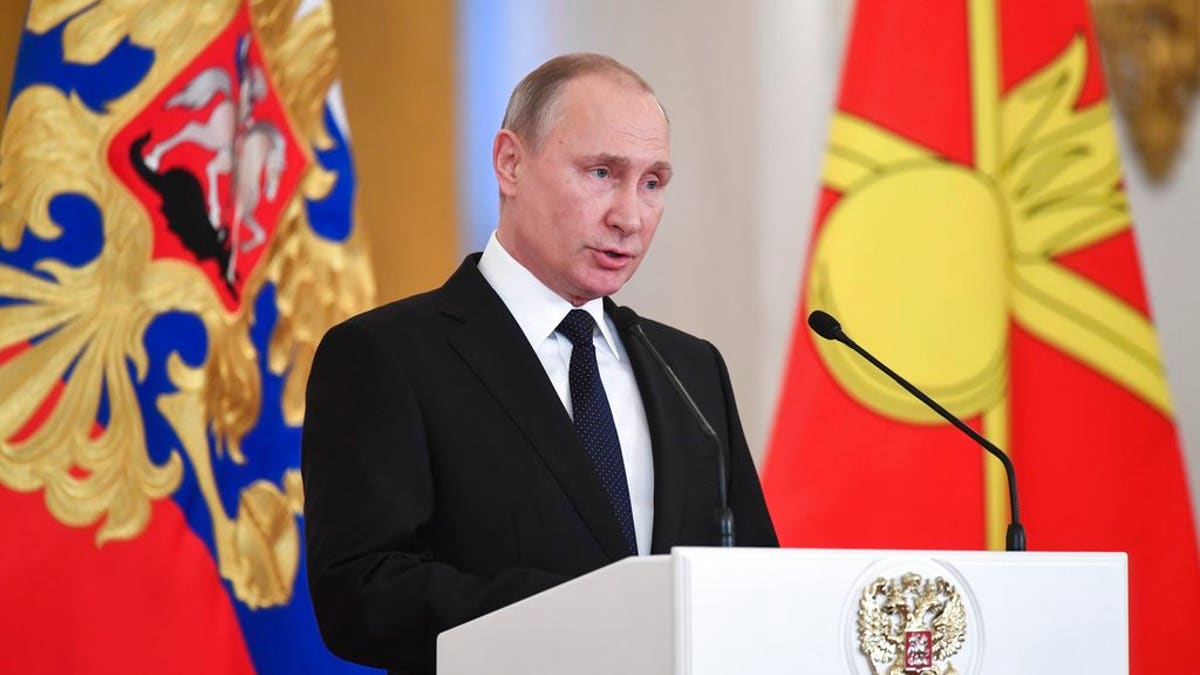
He said the vote will not be free, and the Kremlin is expected to manipulate the results.
But he argued that if public support for Putin’s United Russia party has fallen sharply, it may become harder for the regime to make the official results appear believable.
“Everyone already knows what results they will announce,” Katz said. “The question is whether anyone will believe those results.”
Katz said Putin’s system has long depended not only on control, but on the perception that the Kremlin still commands broad public support.
“Putin has never ruled in a situation where he does not have a majority,” Katz said. “His legitimacy rests on everyone believing that he has majority support. Once everyone believes he does not have a majority, and that he did not just cheat a little but simply drew the results, that is a different story.”
CLICK HERE TO DOWNLOAD THE FOX NEWS APP
He compared the potential challenge to authoritarian systems that are forced to move from managed popularity to open coercion.
“Putin cannot lose like Orban,” Katz said. “But if everyone in Russia knows that everyone voted against him and he drew the results in his favor, that would be a new situation. He has never been in that position before.”
Fox News Digital reached out to the Russian and Ukrainian governments for comment but did not receive responses in time for publication.
Read the full article here