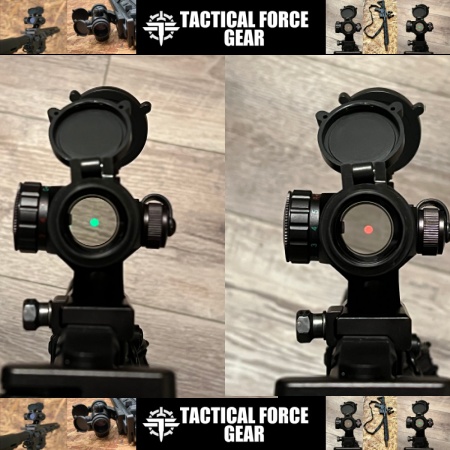

The listed maximum effective range of the M16A4 (top configuration of the title image) is 600 yards (550 meters) on a point target. The maximum range I’ve engaged a point target (a C-Zone steel plate) with the bottom configuration (which is the same rifle as the top, same barrel, same bolt) with a first round hit and multiple hits thereafter is 1150 yards (1051 meters).
What’s the primary difference?
Tightening more of the math behind the shot. The component changes all help because they tighten the math. The rifle isn’t more accurate so much as it can be used more accurately. It is the same barrel and bolt inside the same receivers. Moreover it is older and with more rounds through it. I do not and have never treated this as a base up precision rifle, it has not been used gently or with a mind to maintaining the accuracy optimally.
Advertisement — Continue Reading Below
Yet, this M16A4 FN Military Colletor is far more accurate than its base military stats would have you believe. How? I altered the most limiting factors on the mechanical and kinesthetic accuracy.
Let’s go down that list.
Ammunition, Mechanical
M855/SS109 is objectively a terrible round for accuracy. It was a tremendously limiting factor on the M16 and M4. It is arguably the greatest contributor to the effective range limit. This is due to complexity in its construction, it does not lend itself to being made consistently. But that is another article.
Advertisement — Continue Reading Below
So I put some very reasonably priced match ammo in instead. AAC loaded 77gr SMK. The improved ballistic coefficient will let it go further. The muzzle velocity consistency, known as standard deviation, will keep the trajectory predictable. Better projectile consistency in construction gives increased consistency in external ballistics.
In short, I’ve greatly narrowed the variations in flight path in between individual rounds that are caused by differences in muzzle velocity and differences in bullet construction. I’ve also picked a projectile shape and weight that will fly better through the air.
Advertisement — Continue Reading Below
If the sole component I had changed was the ammunition from M855 Green Tip there would still have been notable improvements in the rifle’s performance.
Floated Barrel, Mechanical
The barrel is steel. Steel is elastic, it flexes. We want it to do that. What we do not want to do is flex it enough to disrupt the bullets travel path from our sight picture. On normal M16s and M4s that is easier to do than one might think.
The old quad rail and clamshell handguards put a contact point by the front sight base and the sling swivel is part of that assembly . Pulling your sling tight or bracing the handguard on something induced flex. That flex was transferred to that muzzle end contact point.
Advertisement — Continue Reading Below
Not much, but not much stacks with each hundred yards of travel. The benefits of using a tight sling to brace and better steady your support of the rifle outweigh the negatives of the induced flex at short to moderate distances. The same can be said of bracing the rifle on any form of support. There are plenty of shots at plenty of distances where doing so is the right call. The 550 meter effective range of the M16A4 does take this into account.
However, at targets small enough and distant enough, that flex will be too much.
So, I floated the barrel. Using a blemished sale acquired BCM quad rail that was designed with the M16 in mind, I removed the famous Knight’s Armament Company handguard and it’s contact point. Now if I induce flex in the handguard from bracing it or putting tension on it from the sling, that flex doesn’t transmit to the barrel. I’m also not using the sling swivel on the gas block, I am using the QD points in the handguard.
Advertisement — Continue Reading Below
With the induced flex now being mitigated to the shared contact point at the receiver and barrel nut, the relationship between my optic and the barrel (which is still just a boring and well used M16 barrel) is not altered by how I support the rifle. It is one of the factors you see in nearly every iteration of modern service rifle, floating the barrel is a very easy thing to build in these days.

Barrel flex is now one more factor that I cannot accidentally change or make less consistent in the base rifle. Accuracy detriment mitigated.
Advertisement — Continue Reading Below
Trigger, Mechanical and Kinesthetic
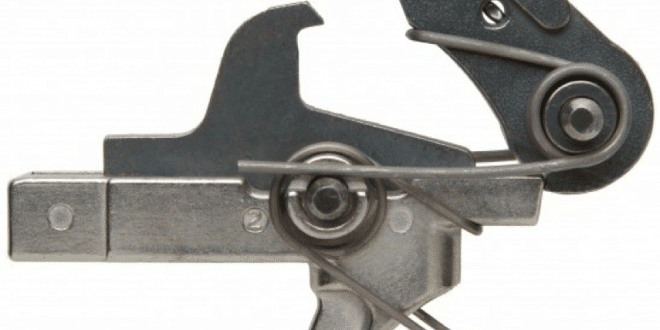
The AR-15 trigger is a good one. No joking, it is a damn good military trigger. Compare it to any NATO or com-bloc service rifles across its decades of service and we really don’t find better until we get to the HK416. If we did the above list of mechanical optimizations to the rifle and left in the trigger it came from the factory with it would be a phenomenal rifle.
But, pulling the trigger is one of the most disruptive required mechanics we must do to operate the firearm. If we can make the mechanical necessity less disruptive and give the operator more tactile control over it we improve the level of available precision.
That is why the trigger specifically gets put into both categories. The stock mil-spec weight range of an M16/AR-15 trigger is 6-9 lbs. The M16A4 weighs in at 8.2 lbs before you add all your gizmos. What that means is that I must put roughly the rifles whole weight in force into the trigger in order to fire it. There are legitimate safety aspects to the mechanic, it is why nearly every service rifle uses a ‘heavy’ trigger of roughly the rifle’s own weight.
But mechanically that is a built in disruption. Like the original pressure point on the barrel it will contribute to the accuracy limit. Now properly gizmo’d, or weighted like some competition rifles are to around 14lbs, you can use brute physics to mitigate that and provide some other stability benefits of mass.
Or you can put in a 2-stage trigger with a top end break weight of around 5lbs +/-1.
By changing the trigger interface to one that only requires roughly one to two pounds of pressure from unfired to fired, with an additional two to three of initial slack, I’ve added a precision kinesthetic element. The shooter can ‘talk’ to the rifle more precisely and it can ‘talk’ back through the sight picture. The combination further refines the user’s control and results in more unlocked accuracy.
Optic, Kinesthetic
An optic does not increase the accuracy of a firearm in the slightest.

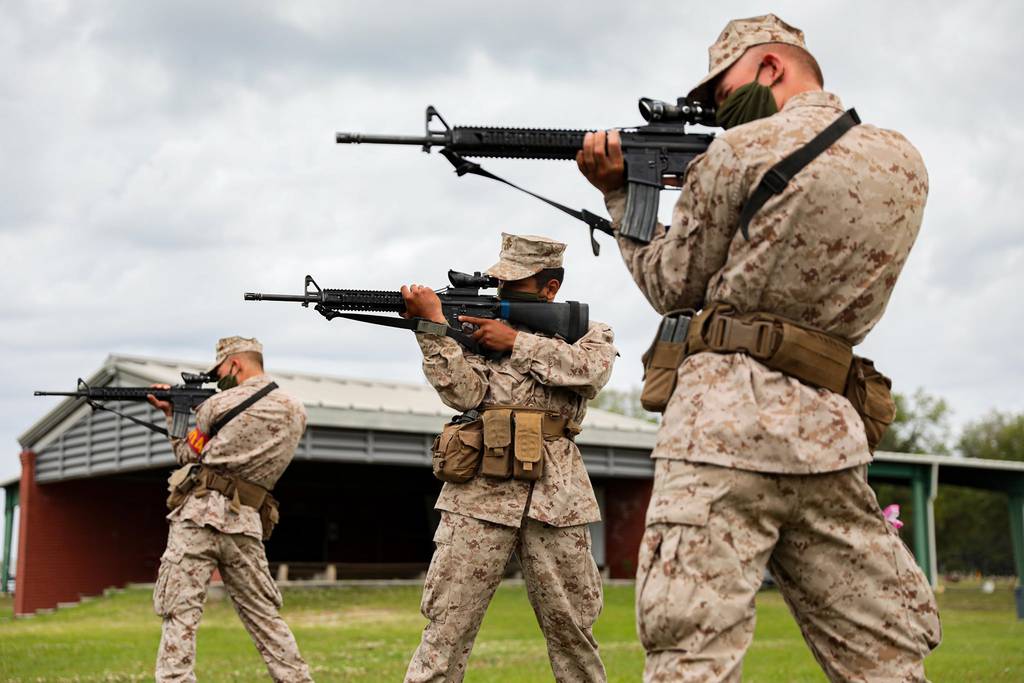
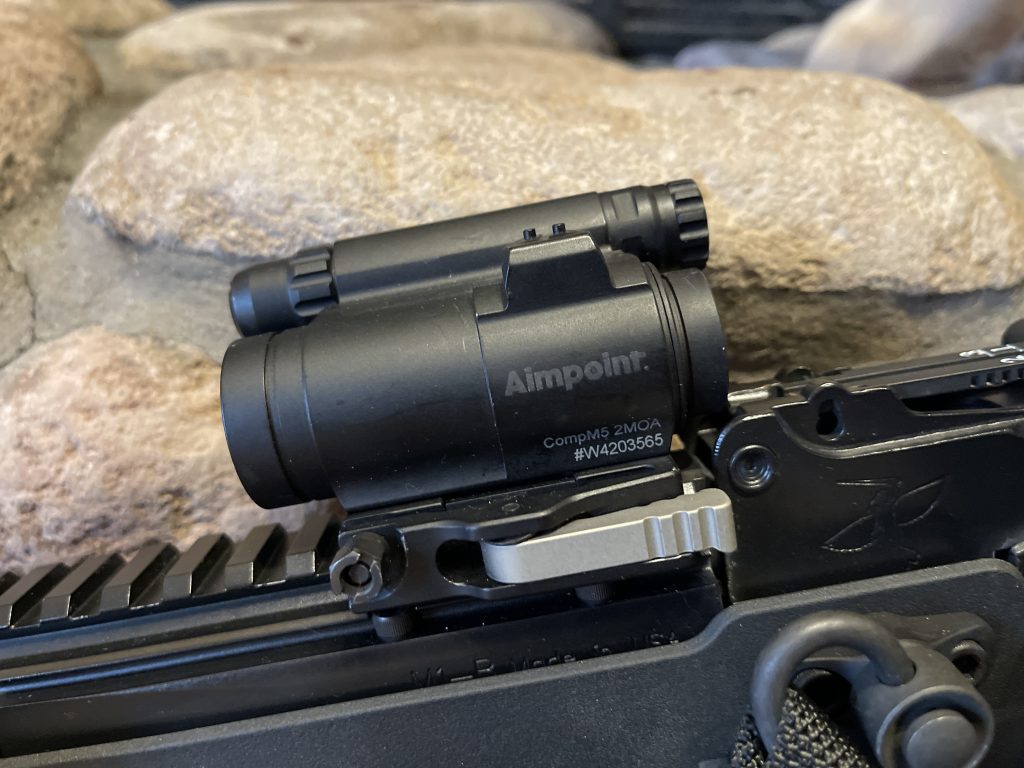
Optics give the shooter information.
The simplest optic, the red dot, gives the shooter a more refined sight picture by making the aiming point small. This small point, often near the mechanical accuracy limit of the rifle with basic ammunition, is permanently aligned with the rifle in a way that a front sight and rear sight cannot emulate.
This is true of all optics, they take a tremendous amount of the subjective positioning a shooter has behind the iron sights out of the equation. Now, like the barrel flex, that subjective positioning isn’t actually that much. But also like the barrel flex, it can and does add up as you add distance or shrink the target.
The optic, especially an optic like the Leupold Mk5 I have, gives me a tremendous amount of additional information and confidence in my sight picture. I then use that wealth of sight gained knowledge to start doing any remaining math on the shot.
Even without the magic of a Kestrel to really refine the data, just the additional observation power that a good scope gives to get a range measurement and look at wind down range make that original 600 yards a limit no longer. Pair that with a basic range dial chart for your ammunition so you can throw an elevation adjustment on your turret, or hold on the milliradian grid in the scope, and our hit percentage continues to climb.
Bipod, Kinesthetic
Not mechanical?
No. The bipod and other supports are helping you interact with the rifle more precisely.
I don’t just mean bipod or tripods either. Shooting bags, rear bags, rests, slings, and shooting mats too. Any and all items that allow you to better glue yourself and the rifle to the earth. Better anchoring means less movement induced into the gun and less movement means that shot gets ever more predictable. Always improving the math.
Precision Stock, Kinesthetic
Like the optic and bipod, the stock doesn’t mechanically increase the rifle’s accuracy at all. Properly adjusted it increases how well you fit onto the rifle. That fit reduces induced movement because you are using less muscle to keep yourself where you need to be behind the sight.
Like the bipod and bags, reduced movement via the stock increases effective range by increasing that hit percentage envelope.
Accuracy Unlocked
As I said above and I maintain, I didn’t make this FN M16 more accurate. I removed mechanical hinderances and fit some elements that were making it challenging to be used most accurately. That may come across as pedantic, but I want that delineation clear in comparison to a full rebuild. I didn’t change the parts that could actually make it more accurate. The barrel, bolt, and receiver set.
I’ve dialed this rifle down to just under a minute of angle with commercially available ammunition and I’m perfectly fine with that. Chasing down accuracy further under a minute is going to start a game of dramatically diminishing returns with a very high time and cost factor. If we take the optic out of the picture we’ve got about $800 taking a, by spec, two to four minute of angle rifle down to just under one. The optic then allows us to take full advantage of it.
And that, my friends, is just fine by me.
Read the full article here