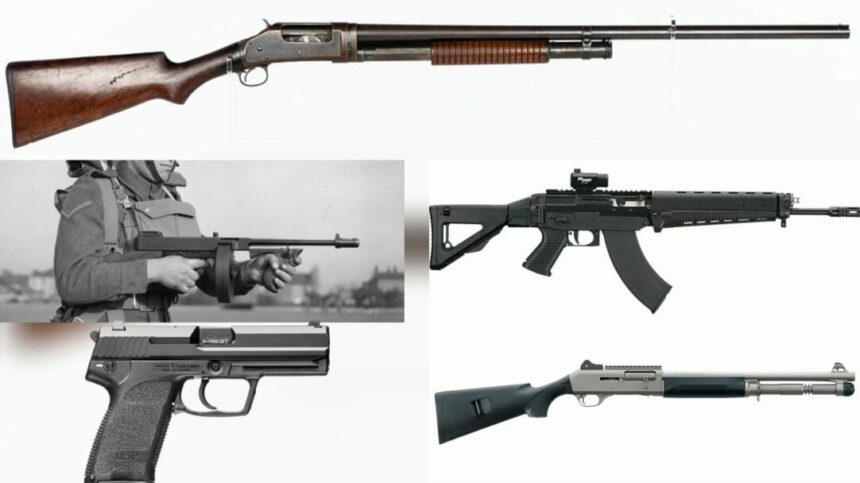


As someone who owns way too many guns, I have had more than a few that I consider disappointments. Guns that disappoint me are not inherently bad. I typically define bad guns as guns that are unreliable, dangerous, and simply can’t achieve their goals. The guns that disappointed me are fine, but they didn’t live up to the hype. I still like them, but more for the vibes than for performance. Here are five guns that left me a little disappointed.
HK USP
The HK USP, or Heckler & Koch Universal Self-Loading Pistol, was introduced in 1993. The Germans at HK gave up on squeeze cockers and roller-delayed pistols and finally saw the light of John Browning’s short recoil system.
The USP was a hammer-fired, DA/SA pistol with a double-stack polymer frame and magazines. HK aimed to arm police and military forces with the HK USP and was quite successful.
Advertisement — Continue Reading Below
The Hype
The HK USP is an icon. It’s the gun on the cover of the first Rainbow Six. It’s the gun chosen by Jack Bauer, Danny Archer, Laura Croft, and Vincent from Collateral. The HK USP was adopted by dozens of military and police forces. It’s used by Special Operations teams, SWAT teams, and more.
It’s famous for its tough-as-nails design. It was built from the ground up to absorb thousands and thousands of high-pressure rounds. In an era where the base model of most firearms was the 9mm version, the base model of the USP was the .40 S&W design.
The HK USP later became the basis for the MK 23 Offensive Handgun, designed for the United States’ military’s most elite forces. The HK USP is a hype train.
Advertisement — Continue Reading Below
Why It’s A Disappointment
The HK USP is fine. It’s reliable, accurate, and, outside of its ability to seemingly live a life of abuse, it’s just okay. The ergonomics are nothing special; it’s quite large, but it only packs 15 rounds of 9mm. If you expected a good trigger, well, don’t. It’s fine, but for a 1,200 dollar gun, I expect more.
Like your cool uncle, it’s still living in the 1990s. HK must be allergic to the idea of a Gen 2. They still produce the USP, and they’ve never thought to modernize the gun. The accessory rail is proprietary, so you need an adapter for weapon lights.
Advertisement — Continue Reading Below
Optics ready? You wish. If HK is still going to produce this gun and set the MSRP at 1,200 dollars, they could at least match the feature set of a Taurus G3.
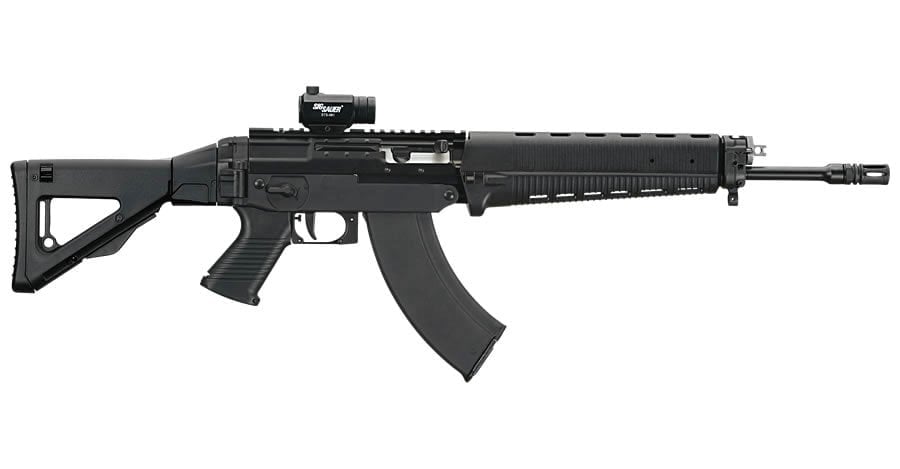
SIG 556R
I’m a sucker for SIG 550 rifles. I don’t know why, but they speak to me. The SIG 550 series is a series of Swiss rifles used by the Swiss military. Switzerland gets awfully cold, and as the Russians proved a long-stroke gas piston, so it’s no surprise they used the same design inside the 550 series.
In the mid 2000s, SIG USA decided to give Americans the tiniest sip of 550 rifles with the 556 series, and I was excited. I saved my pennies and eventually purchased a Gen 1 SIG 556R. People often compare the 550 series to AKs, and the SIG 556R doesn’t help that inaccurate description.
Advertisement — Continue Reading Below
It fired the 7.62×39 round from standard AK magazines. I went with the 556R cause at the time, 7.62x39mm was uber cheap, and I had a pile of it.
The Hype
The SIG 556R arrived at a time when the AR vs. AK debate was still raging on the forums. The SIG 556R promised to be the ultimate AK killer. It offers better ergonomics, greater accuracy, and a blend of AK reliability and Western modularity. Plus, for guys like me, the 550 series was unobtainable, so we finally got our taste.
Advertisement — Continue Reading Below
The Disappointment
So right away, my SIG 556R didn’t work. It would not eject or cycle reliably. I will give SIG a lot of credit. I contacted them, spoke to a guy named Kyle, shipped my rifle off, and it came back quickly and was fixed. Big ups to Kyle; you’re still the man.
Once my 556R was working, it was fine. Yep, just fine. Accuracy was better than most AKs, but squeezing a sponge is a great 556R trigger simulator. The gun’s front is heavy, and the stock feels fragile and difficult to extend to the desired setting. The safety might beat the AK design, but you’re still stuck with a reciprocating right-side bolt and the lack of an LRBHO.
Benelli M4
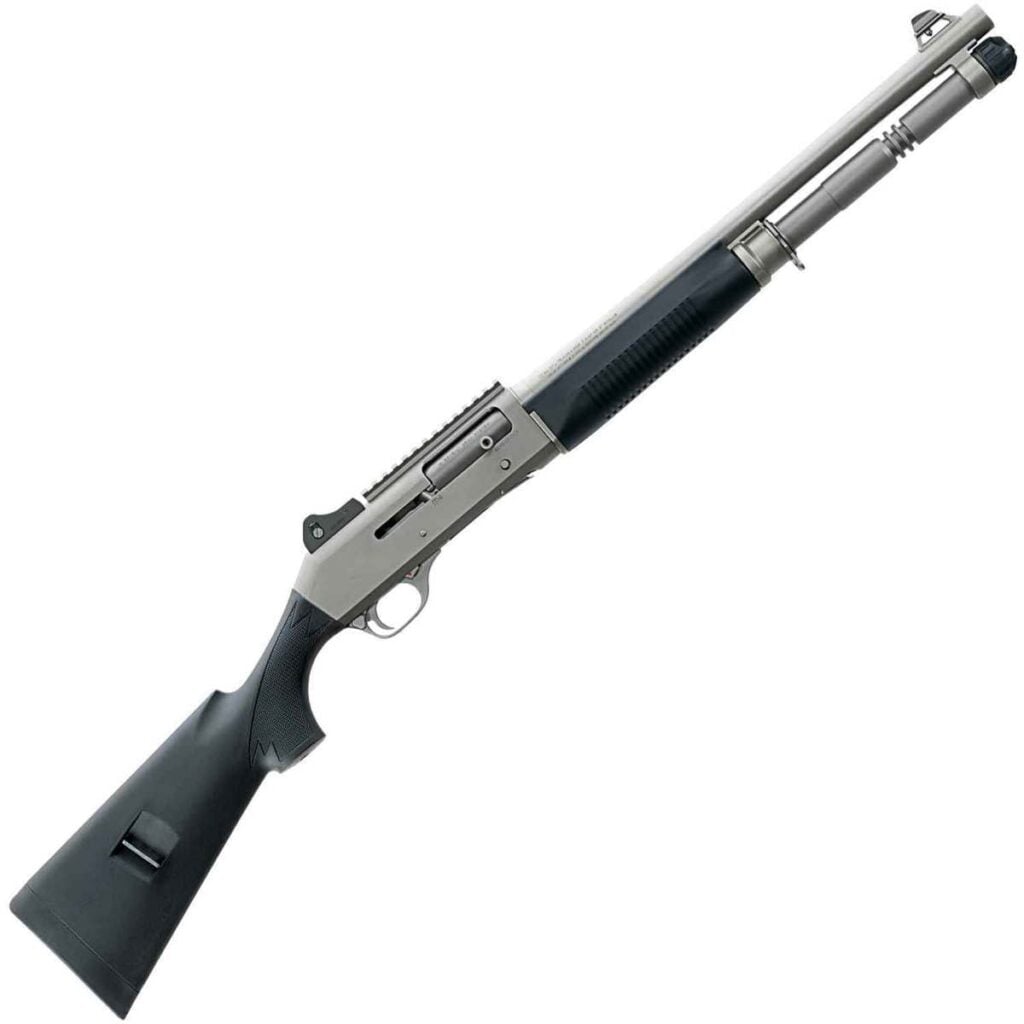
Benelli produced the M4 series to satisfy a need of the U.S. military in 1999. The U.S. military wanted a semi-automatic combat shotgun, specifically a gas gun. Beneli made inertia-based semi-autos, so the M4 would be their first gas gun. The Benelli M4 won the contest and became the M1014 shotgun.
Advertisement — Continue Reading Below
The Benelli M4 uses a short-stroke, dual gas-piston design to ensure total reliability under all conditions. It’s a gun that chews through ammo with little need to clean it. The original model featured an optic rail, a three-position collapsing stock, a seven-round magazine tube, and ghost ring sights.
The Hype
The Marine Corps led the program, so it’s often called the Marine Corps’ fighting shotgun. That’s a pile of hype, but that’s not all. It’s been adopted by numerous military forces, including elite special operations forces around the world.
Plus, it’s been in most of the big military shooting games. The Call of Duties, Counter-Strike, Battlefield, and so many more. Lots and lots of games, movies, and shows portrayed the Benelli M4 in action.
The Disappointment
If your sole need is for reliability, then the Benelli M4 is for you. It absolutely dominates in the reliability department. It just keeps shooting and shooting. That’s great, but everything else, not so much. The cost of the Benelli M4 is absurd at over two grand.
Plus, you have to spend money to turn it into a real Benelli. You have to unneuter the gun, which is expensive, and the three-position stock is extremely expensive. Not only that, but the stock kind of sucks. The bolt release also sucks. Adding accessories isn’t easy, and it’s certainly not cheap.
Luckily, Benelli fixed this with the M4 EXT, but that gun is even more expensive. Admittedly its the way to go when it comes to the Benelli M4. I can’t help but think the money might be better invested in a 1301 these days.
The Winchester 1897
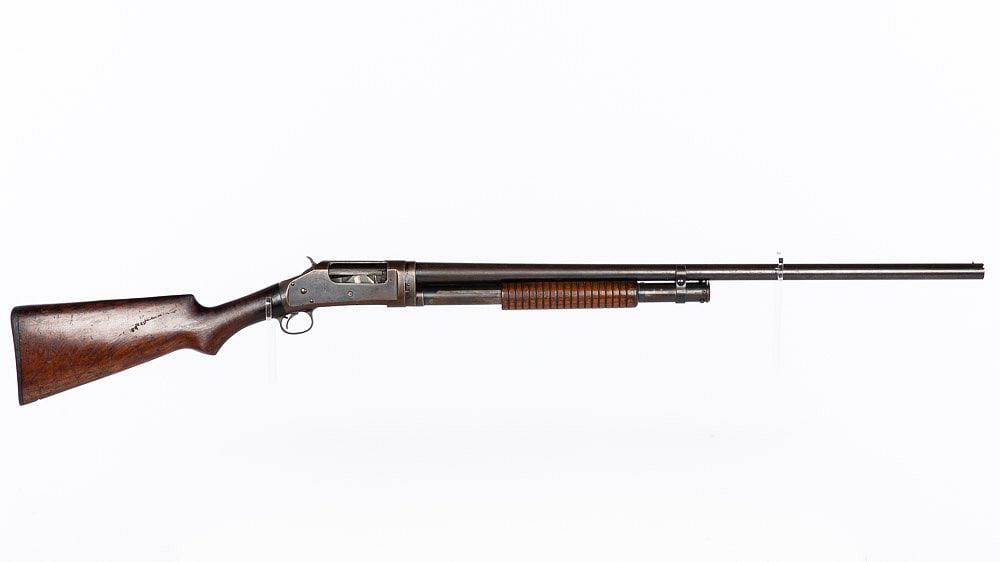
The Winchester 1897 wasn’t the first pump-action shotgun, but it was the first successful pump-action shotgun. This John Browning design started in 1893, but 1897 was its true form. The M1897 was an exposed hammer-fired pump-action shotgun with a five-round magazine capacity.
The 1897 proved that the future of the repeating shotgun was a pump-action design. Even now, more than a century later, the pump-action still has a foothold in the market. The Winchester 1897 was produced for decades and would become a dominant combat shotgun.
The Hype
When you say trench gun to gun people, they picture the Winchester 1897, its distinct heat shield, and sword bayonet. This gun became a legend in American hands, and as you all know, the German Kaiser famously protested the use of shotguns.
The M1897 is another gun that chews pop culture scenery. It’s in WW1 and WW2 movies, video games, and beyond. It’s an American icon and a combat shotgun icon. It can slam fire! Who could hate it!
The Disappointment
You never realize how rickety these things are until one’s in your hands. The guts eject out the bottom, and the bolt can slam into your finger as it tries to cock the hammer. Everything feels fragile, from the thin forend to the small little bolts that look like they want to work their way out.
What about slam fire? Well, it’s just kinda lame. It’s like bump fire; it’s fun for about ten rounds, and you realize it’s just a bit silly. It’s tough to aim, hard to control, and, like I said, less effective than just shooting the gun normally.
Don’t get me wrong, it’s an early shotgun design, so it’s bound to have quirks. The problem is that by the time the Trench Gun came around, the Winchester Model 12 already existed. The Model 12 deserves all the praise that’s often heaped on the M1897.
The Thompson SMG
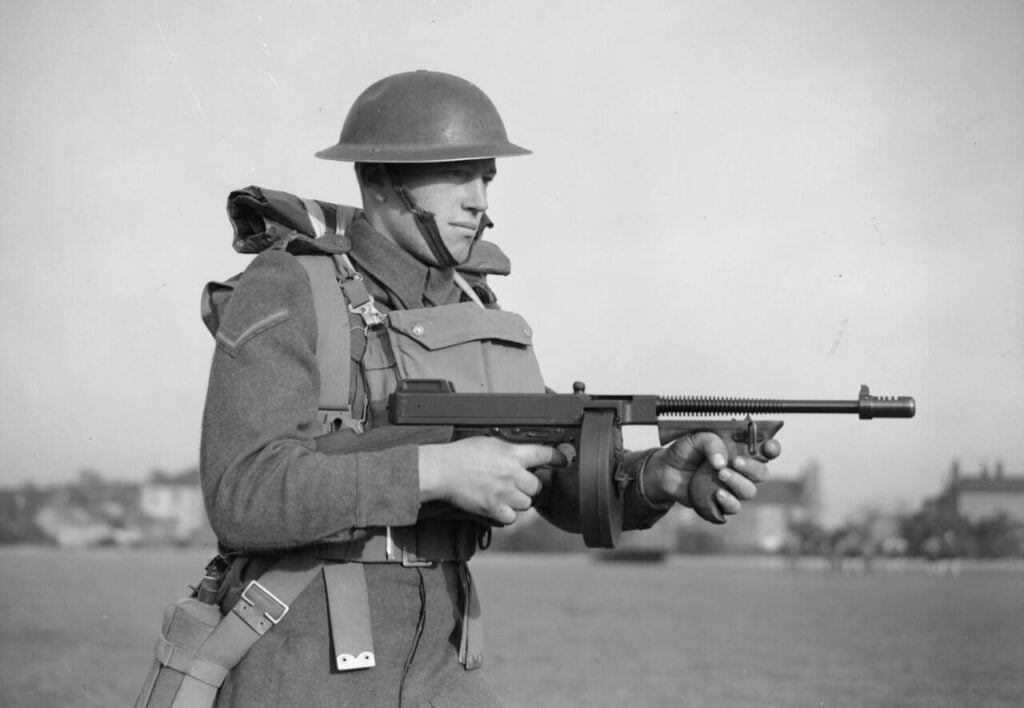
The Thompson submachine gun is one of the earliest submachine guns. Not the first by a shot, but it became one of the most dominant submachine guns in the world. Thompson designed a machine gun that fired from an open-bolt design and fed from a variety of magazine sizes. Thompson even managed to integrate a novel delay system known as the Blish lock.
The Thompson didn’t succeed at first. It was expensive, and World War 1 was over, so there wasn’t a ton of interest in the design at first. In fact, the folks who were interested in the Thompson were unsavory types. It became the gun of bank robbers and mobsters, not in any major numbers, but enough to give the Thompson a reputation.
The Hype
That criminal endeavor introduced a degree of notoriety and romanticism to the gun. It became famous due to men like Al Capone and John Dillinger. The Thompson also found massive success in World War 2 were a simplified model, the M1A1, became the main submachine gun of military forces.
Much like the 1897, the Thompson grew into pop culture. It populated movies, video games, T.V. shows, and every History Channel documentary on World War 2. The Thompson rose to a height that’s rare for firearms; it became a household name.
The Disappointment
Don’t get me wrong, I’d do some pretty crazy stuff to own a real Thompson. I did have the pleasure of firing a few magazines through one on full-auto. Anything full-auto is fun, but after I was done, I wasn’t blown away.
The gun’s heavy, heavier than an AR-15. The weight does tame recoil, making it incredibly easy to control. Beyond that, it was kinda meh. It feels like the stock was just kind of added without a lot of thought to it. The ergonomics are awful, and the dear Lord, I was afraid of the magazine falling out every time I reloaded it due ot lack of feedback of any kind.
Disappointments
These disappointments aren’t bad guns by any means. These guns just didn’t live up to the hype I expected. They are fine, mostly, but they are far from extraordinary. They all tend to do a thing or two well, but they don’t excel overall.
Read the full article here