

NEWYou can now listen to Fox News articles!
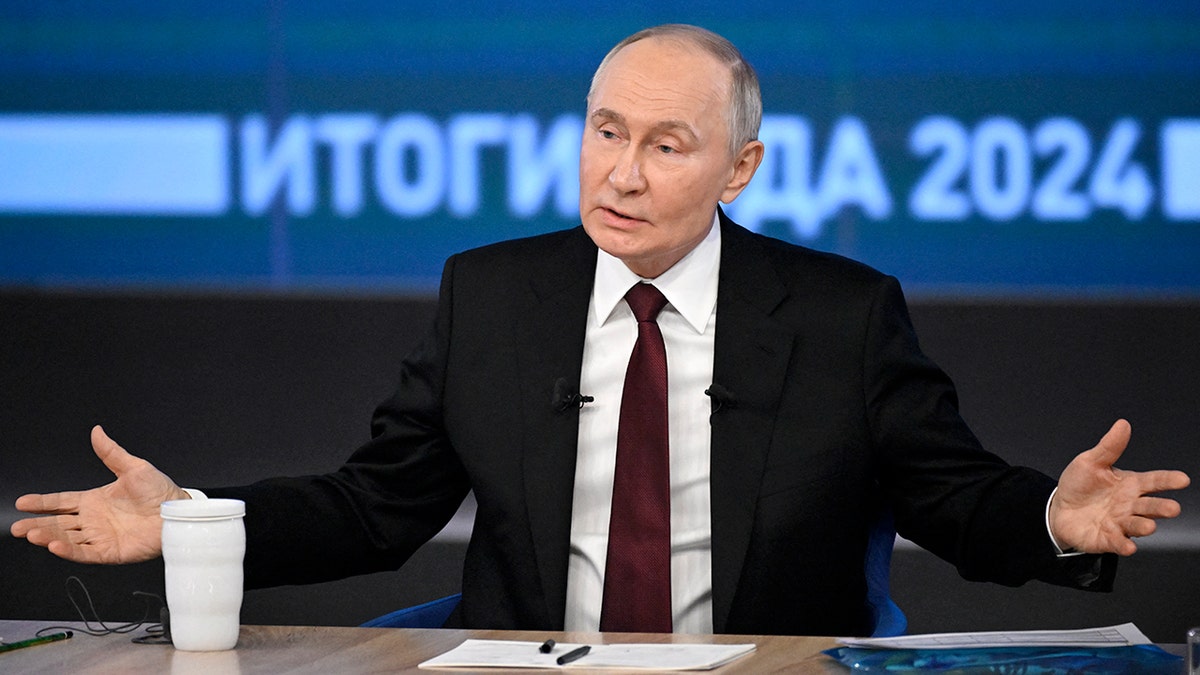
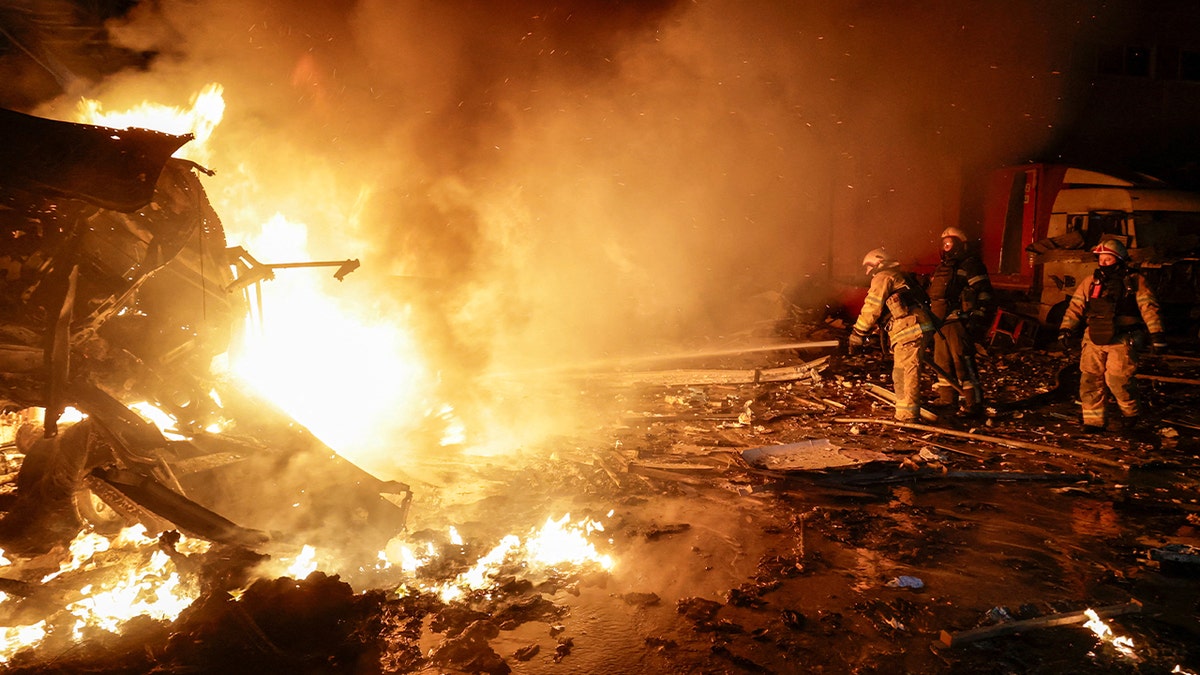
Ukraine’s intensifying campaign against Putin’s oil industry is having a growing impact inside Russia, forcing one of the world’s largest energy producers to restrict diesel exports, pursue fuel imports and confront shortages stretching from occupied Crimea to cities deep in the country.
Inside Russia, the consequences are becoming increasingly visible. Former Russian opposition politician and commentator Maxim Katz said the shortages represent one of the first direct ways many Russians have experienced the consequences of the war — and could become particularly sensitive ahead of State Duma elections scheduled for September.
“This is the first time that Russians actually sees that the war has an effect on their day-to-day life — not only in the cost of fuel, but in its availability,” Katz told Fox News Digital in a Zoom interview from Israel, where he lives in exile. “You cannot buy it. And that’s a big deal for Russia.”
DRONE OFFENSIVE HITS RUSSIAN OIL TANKERS AND REFINERIES AT ‘INDUSTRIAL SCALE’ AS MOSCOW BANS DIESEL EXPORTS
Katz said elections in Russia are neither free nor competitive, but they still serve an important function for Putin by projecting public support to regional leaders, business figures and other members of the elite.
“If everybody sees in September that he has 20% support or 10% support, then questions begin about why he should appoint governors or control the system,” Katz said. “That is something he does not want to deal with.”
The fuel crisis, Katz argued, threatens Putin’s effort to portray himself as fully in control and to keep the cost of the war away from ordinary Russians.
“Putin tried to convince everybody that Moscow would continue to live its regular life and nobody would see the war,” Katz said. “It was his war, not the war of ordinary Russians. But when the war comes home, this is a completely different story, and it changes the equation.”
Katz also pointed to the striking reversal of Russia — historically one of the world’s largest exporters of oil and refined products — seeking fuel supplies from abroad. Reuters reported that Moscow had approached Kazakhstan about importing approximately 50,000 metric tons of gasoline after refinery outages reduced Russian gasoline output by roughly 25% from a year earlier.
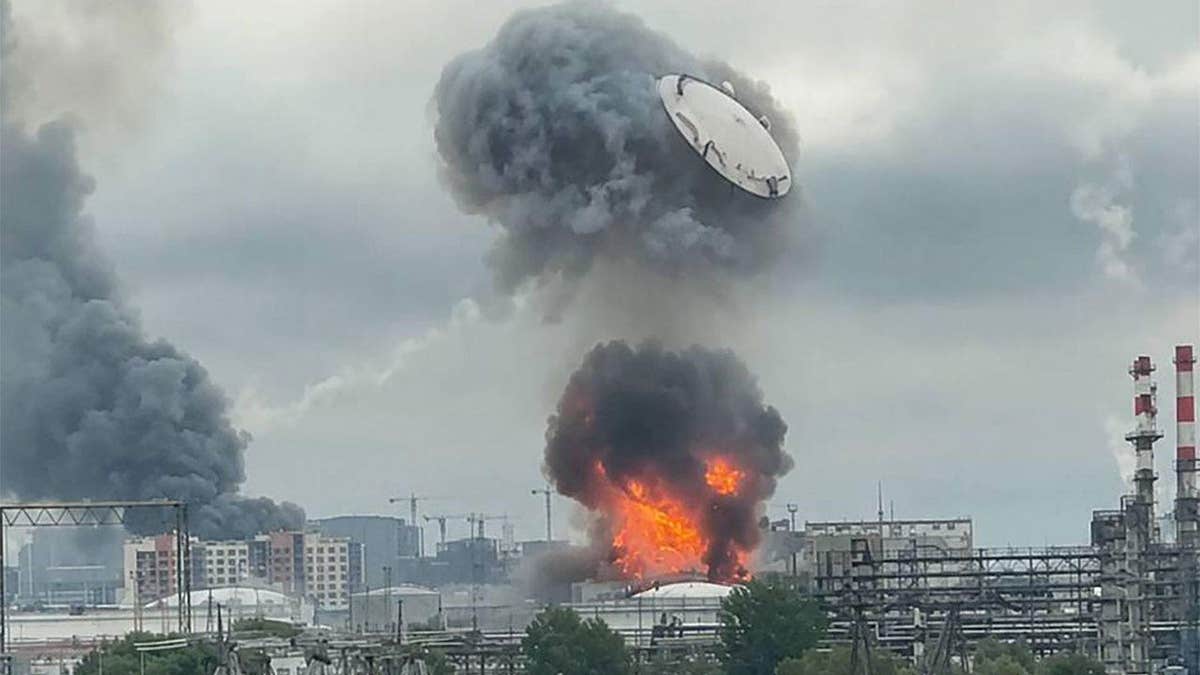
The campaign reached a new milestone this week when Ukrainian drones struck the Omsk refinery, Russia’s largest, roughly 1,700 miles from Ukrainian-held territory. The facility temporarily halted processing after the attack, according to Reuters. Days later, another strike shut Russia’s Saratov refinery for the third time this year.
The expanding crisis raises a central question for Ukraine and its allies: Can attacks on the infrastructure that powers Russia’s military and economy alter President Vladimir Putin’s calculations — or will the Kremlin continue shielding its war effort while shifting the burden onto ordinary Russians?
“They have to buy fuel from Kazakhstan now,” Katz said. “Russia is one of the biggest exporters of oil and oil products and always has been. This is crazy.”
Still, Katz cautioned that the Kremlin would likely continue prioritizing military supplies even as civilian shortages worsened.
“He will find the fuel for the tanks. That is not the issue,” Katz said. “The issue is his grip on Russia.”
WATCH: FIGHTS BREAK OUT AT RUSSIAN GAS STATIONS AS PUTIN ADMITS FUEL SHORTAGES
Retired U.S. Air Force Gen. Philip M. Breedlove, former commander of U.S. European Command and NATO Supreme Allied Commander Europe, said the effects are already becoming significant.
“Without question, Ukraine’s campaign against Russia’s oil and energy infrastructure is having a real and growing impact on the Russian homeland,” Breedlove told Fox News Digital. “The reported reductions in fuel production are significant — close to a third by some estimates.”
“These strikes are beginning to seriously impact not just the economy but the Kremlin’s ability to sustain its war effort and military operations,” he added. “When Ukraine is able to hit large, high-value energy targets deep inside Russian territory, that changes the equation.”
“Russia cannot effectively defend every refinery and energy facility across their enormous territory, and that is the core problem for Moscow,” Breedlove said. “Every asset they deploy to defend their infrastructure are assets not deployed to the frontlines.”
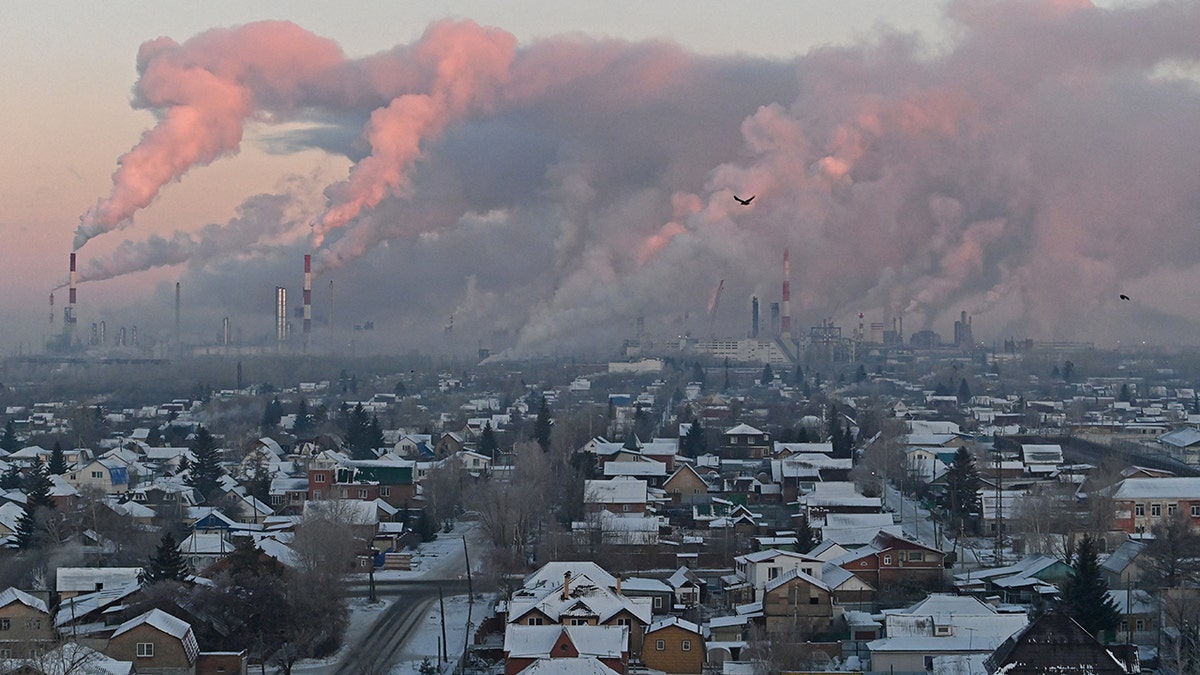
Moscow has already taken emergency measures. Russia banned diesel exports through the end of July as drone attacks forced unplanned refinery shutdowns and reduced domestic supplies. Seaborne exports of diesel and gasoline fell 39% in June compared with May and 46% from the previous year, according to Reuters.
RUSSIAN GENERALS’ ASSASSINATIONS EXPOSE GROWING RIFT INSIDE PUTIN’S SECURITY APPARATUS
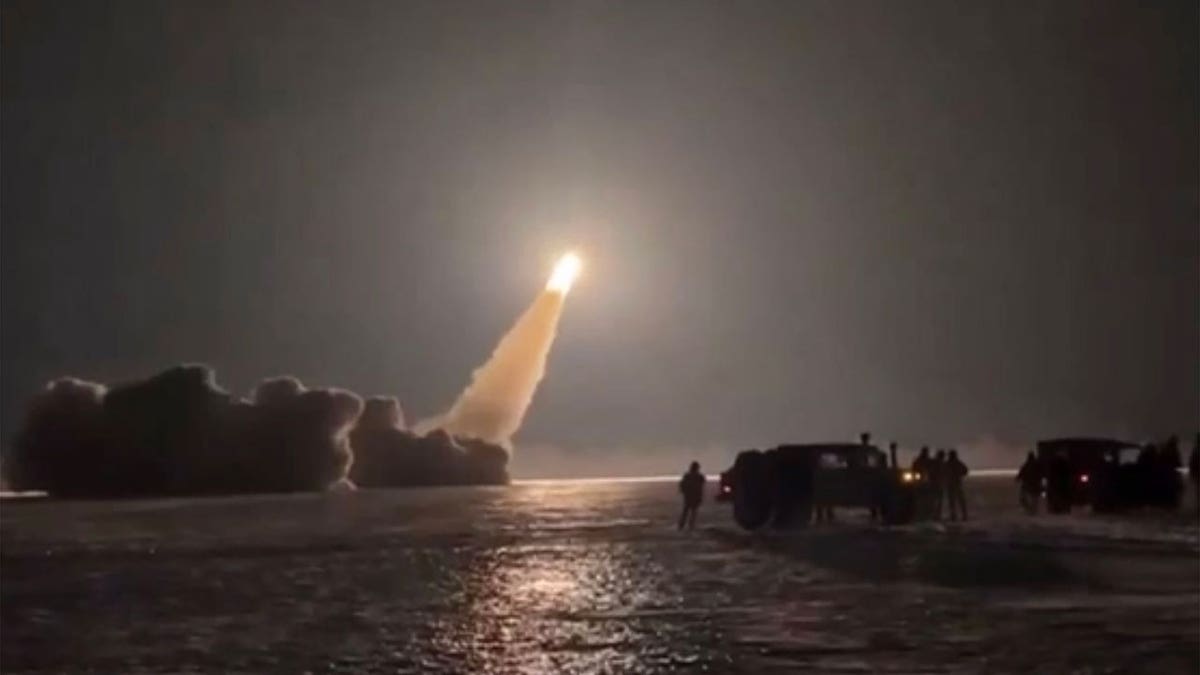
Ukraine’s ambassador to Israel, Yevgen Korniychuk, said American intelligence has played an important role in helping Kyiv penetrate Russia’s extensive air-defense network.
“You always have to give credit to the United States,” Korniychuk told Fox News Digital. “U.S. intelligence is helping Ukrainian missiles and drones avoid Russian anti-missile defense.”
The Wall Street Journal, citing U.S. officials, said in a 2025 report that “The U.S. will provide Ukraine with intelligence for long-range missile strikes on Russia’s energy infrastructure.” Reuters, citing the Financial Times, also reported that “U.S. intelligence has helped Kyiv strike important Russian energy assets, including oil refineries, far beyond the front line, the newspaper said, citing unnamed Ukrainian and U.S. officials familiar with the campaign.”
Fox News Digital reached out to the State Department and the White House to confirm the reports and the Ukrainian ambassador’s claims.
Korniychuk said the strikes are creating serious pressure inside the Russian system, even if they have not yet persuaded Putin to change course.
“The majority of the Russian leadership understands that this is a crucial problem, but Putin personally does not,” he said. “The distance between him and the rest of the Russian leadership is growing tremendously. Even people he has trusted for many years understand that this is going nowhere, but that will not necessarily bring Putin to the same conclusion.”
Retired Lt. Gen. Richard Newton, former U.S. Air Force assistant vice chief of staff, argued that the broader strategic picture is shifting in Ukraine’s favor.
“Throughout the conflict, the vast majority of the Russian homeland has been a sanctuary,” Newton said. “However, over the last several months, Ukrainian drone attacks have reached deep inside Russia — up to 1,500 miles recently.”
Newton said the pressure was arriving as Western support strengthened.
“That is a credit to President Zelenskyy, his military leadership and Ukraine’s defense industrial base,” he said. “And it comes at the right time, with Europe now providing military capabilities and financial resources — and now, with renewed public support from President Trump.”
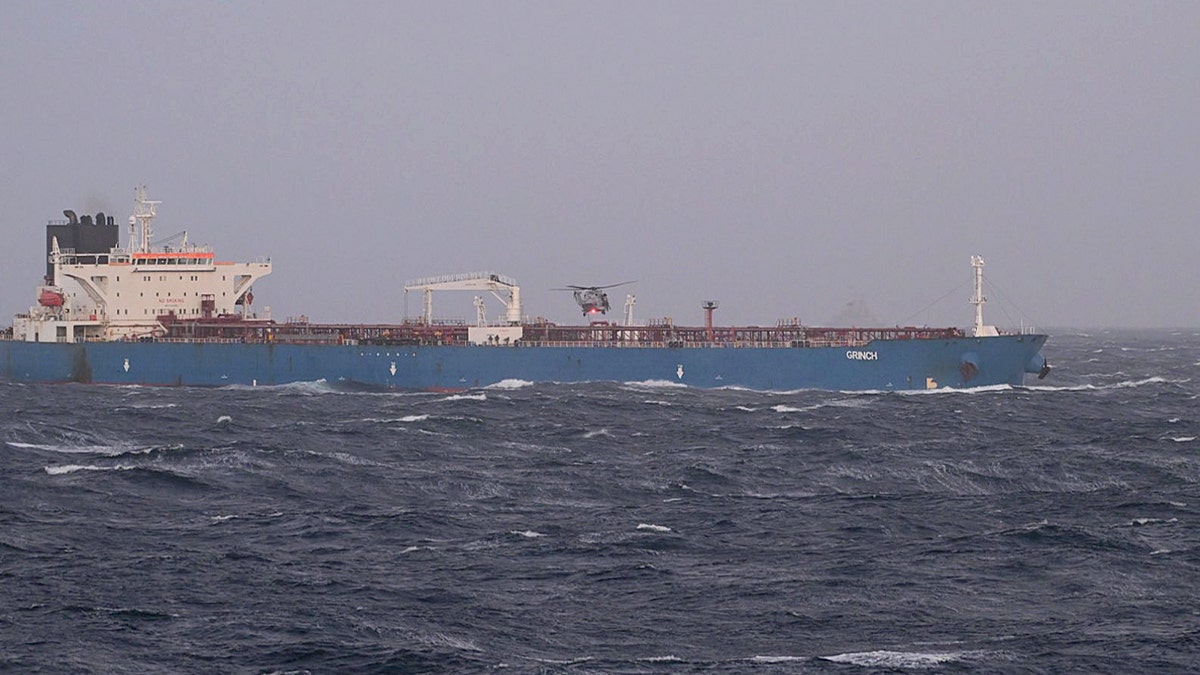
Yet the strategy has limits. Russia continues to generate billions in energy revenue beyond the reach of Ukrainian drones.
Urgewald, a Germany-based nonprofit environmental and human-rights organization analysis of Kpler cargo data found that the European Union received 114 of the 118 cargoes shipped from Russia’s Yamal LNG project between January and May 2026 — about 97% of the project’s exports. The shipments totaled 8.37 million metric tons and had an estimated value of roughly $5.7 billion.
“Current trends show EU payments for Russian Yamal LNG are on course to reach almost $7 billion in the first half of 2026 alone,” Alexander Kirk, a sanctions campaigner at Urgewald, told Fox News Digital. “These dollars support Russia’s war economy and help sustain Moscow’s aggression against Ukraine, including the drone and missile warfare terrorizing Ukrainian cities.”
The figures capture the dual reality confronting Kyiv: Ukraine can damage refineries, disrupt domestic fuel supplies and force Moscow to divert resources, while Russia continues earning substantial revenue from global energy markets.
Amb. Korniychuk said Zelenskyy had given the military 40 days to substantially change the situation.
Katz cautioned that there was no way to predict whether Putin’s system was approaching collapse, but said authoritarian regimes can appear stable until they unravel with extraordinary speed.
He compared that uncertainty to the final months of the Soviet Union.
“Nobody before the August Putsch could even think that in three months from now there would be no Soviet Union,” Katz said. “Systems like this — this is one of their common things — collapse quick.”
For now, Ukraine’s strikes have not halted Russian military operations or forced Putin to negotiate. But they have reached deep into Russia, strained its fuel system and undermined the Kremlin’s effort to keep the war distant from its population.
CLICK HERE TO DOWNLOAD THE FOX NEWS APP
The question being asked by analysts is no longer whether Ukraine can hit Russia’s economic engine, but how much sustained pressure that engine — and Putin’s political system — can withstand.
Read the full article here