
I have a general rule of never saying never when it comes to things in the world of firearms. As soon as you do, someone proves you wrong. With shotguns, reloading can be a critical component of employing the weapon. Due to the relatively low capacity of the platform, it’s wise to keep shoving shells into the gun. We can reload through the designated reloading port or, in an emergency, throw one directly into the chamber through the ejection port.
Reloading a shotgun isn’t as easy as reloading a firearm with a box magazine. It takes practice and effort to get fast at it. I tend to be a fan of “shoot two, and when you have a second, reload two.” I use standard Safariland belt loop twin loaders or a side saddle to hold extra ammo. Like most tactical guns, a traditional reload uses your support hand to shove shells into the gun.
There is an alternative option—well, several alternative options—but we’ll focus on one popular with action shooting sports like 3-Gun: violin loading. To violin load, you pop the stock up and over your shoulder. Your support hand remains on the forend of the gun, and your firing hand chucks shells into the tube.
Advertisement — Continue Reading Below
The emphasis is on speed and loading twins or even quads if you’re talented enough. This means shoving two to four rounds into the gun at once. With that said, you don’t have to twin or quad load your gun; you can still shove shells in one at a time. Violin loading relates more to the gun’s position on your shoulder rather than how you’re shoving shells into the magazine.
Violin loading is designed for rapidly replenishing the gun, but it violates one of the big tactical rules that is supposedly set in stone: you are using your firing hand to reload the gun!
Advertisement — Continue Reading Below
Breaking the “Gamer” Stigma
Violin loading is often seen as a “gamer move,” something that would supposedly get you killed in the streets. You’re using your firing hand, you are orienting the gun in an odd position, and it can be slow to jump from the reload position back to the firing position. At least, that’s the impression.
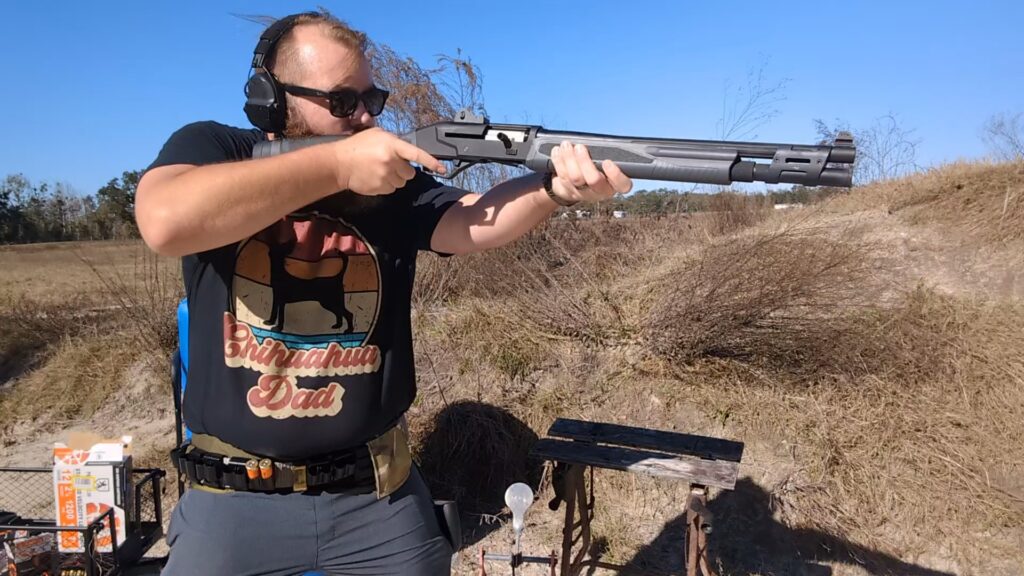
It allows a 3-Gunner to shave those precious seconds off their time to get the shotgun back up and running for ammo-heavy stages. But can the violin load actually be used for tactical applications?
Advertisement — Continue Reading Below
The Reality of the Reload
Shotgun enthusiasts like myself often put a lot of emphasis on the reload. The inherent fear of running dry with a weapon that holds only four to seven rounds is very real. In reality, reloading a shotgun in a defensive situation tends to be fairly rare. Within the effective range of a shotgun, a skilled shooter is unlikely to miss so many times that they run out of ammo.
The devastating effect of buckshot tends to end fights quickly, often with a single round fired. Information gathered by Greg Ellifritz on “one-shot stops” puts the shotgun quite high, and his study includes various gauges and calibers.

Advertisement — Continue Reading Below
You can talk about multiple threats, and with a Remington 870 and a four-round tube, you might have a good point if everything goes wrong. However, with a more modern tactical shotgun holding seven rounds, you are either missing a lot, or the last man standing is going to have to climb over a pile of his dead friends to get to you.
Yet, we persist in being competent at reloading because it’s a “maybe.” We want to be skilled in every aspect of the gun, and reloading is part of that.
The Tactical Advantages
Speed is everything with a shotgun because in close-quarters combat, speed is everything. Reloading fast can be invaluable, and violin loading allows for a very fast reload. Even when loading a single round, the motion is intuitive and easy to master.
Advertisement — Continue Reading Below
Quad loading will be tough without a 3-gun caddy—at least it’s tough for me. I used my Safariland belt-mounted double pouches and could grab both rounds to do a fairly quick twin-loading procedure. It’s faster than my traditional reload of keeping the gun up and on target as I squeeze rounds into the tube one at a time.
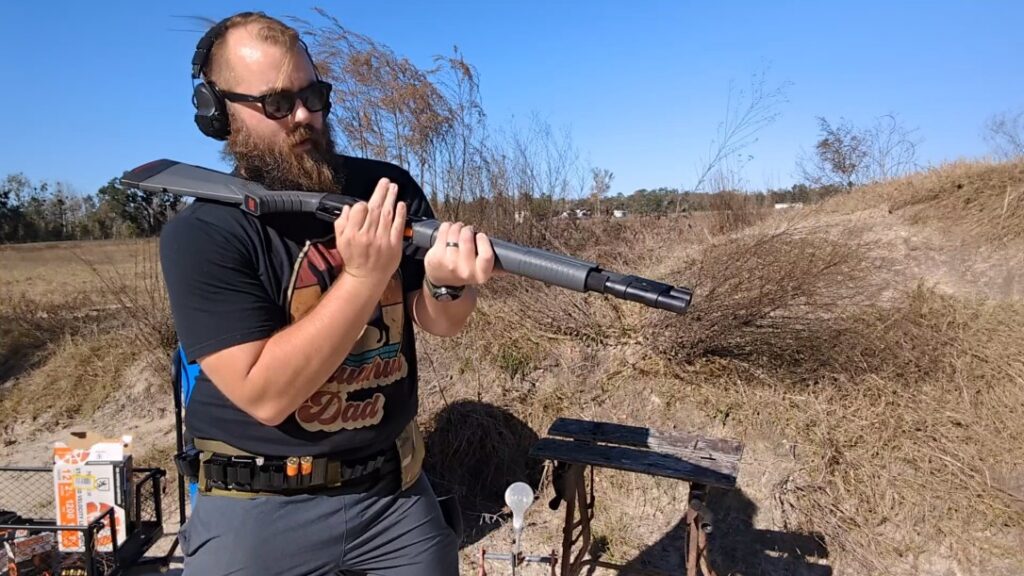
It’s also more comfortable; I’m resting the gun on my shoulder while my support hand grabs the front. With a traditional reload, I’m either tucking the stock under my arm or supporting the entirety of the shotgun’s weight with my wrist. With most shotguns, this is easy, but add a 20-inch 590A1 barrel with a light, and things get front-heavy fast.
Advertisement — Continue Reading Below
On the flip side, guns like the Mossberg Shockwave don’t have stocks, but a modified violin load still makes them easier to load. A traditional reload can be tough with these guns because all the weight is on your wrist without the shoulder to help stabilize it. Using a modified violin load makes these guns quick and easy to feed.
Visibility and Movement
Plus, you can easily see what you’re doing when you reload. We accept looking at the magazine loading into a handgun or a rifle, so why not accept looking at rounds loading into a shotgun tube?
I have great muzzle control and can keep the gun pointed safely downward as I load. There is less upper-body movement involved, whereas with a normal reload, the muzzle often moves as the body shifts. Where I saw the violin load really shine is when moving and reloading simultaneously.
Advertisement — Continue Reading Below
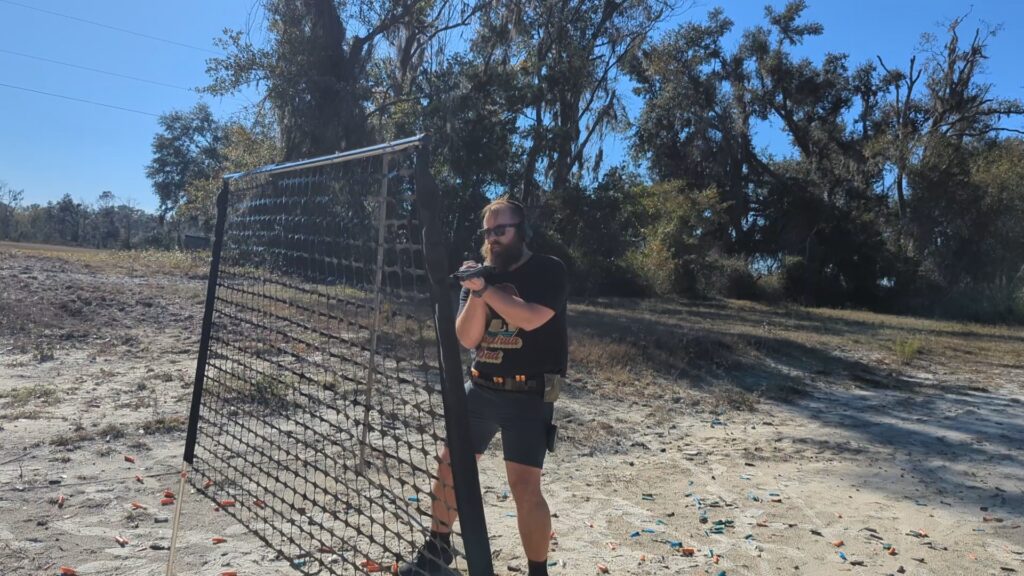
I can set the gun up and reload on the move fairly competently. It’s much easier than holding the gun up and moving while reloading. I can move to cover without risking flagging anyone, reloading quickly and efficiently. You could even argue it offers better weapon retention, though if a threat is still actively present, I’m probably not violin loading.
The Downsides
Nothing is free. The biggest issue is transitioning from the violin load position back to a shooting position if a threat suddenly appears. It takes about a second to get from that position to landing a shot on target. From a traditional aimed reloading position, it’s about a quarter-second or less.
Advertisement — Continue Reading Below
You can fire the gun from a “short stock” position rather quickly from the violin position, but that doesn’t offer the same recoil control or accuracy as a normal firing position. It’s doable, but not optimal.
Violin loading can also be tough with side saddles. You have to orient the ammo brass-down, which means using a high-quality carrier. Aridus is the only one I trust completely not to lose rounds when I start jostling the gun. The TPU side saddles from Pew Pew Koncepts are a close second, but I only have a couple of months with them, so they don’t get a full endorsement yet.
Finally, in training, you realize quickly how hot shotgun barrels get. This is unlikely to be a serious issue in a defensive encounter, but violin loading means putting your hand near a very hot barrel.
Going Fast
Ultimately, the violin method can most certainly be used in tactical situations. It seems best reserved for lulls in the fight or when using cover. It’s exceptionally useful for moving and loading, and very intuitive for reloading in general. While it’s not perfect, it’s a tool a shotgunner should have in the box.
Read the full article here