
The Remington Model 31 is a shotgun that often gets left out of the “hall of fame” conversation. While the Winchester 1897 and Model 12 are legendary, the Ithaca 37 remains a cult favorite, and guns like the 870 and 590 dominate the modern market, the Model 31 sits in a bit of a shadow. It belongs to what I call the “second generation” of pump shotguns—the same era as the Model 12 and the Ithaca 37.
The Model 31 from Remington
Remington produced the Model 31 in 12-, 16-, and 20-gauge. The gun was intended to compete directly with the Winchester Model 12. Designed by John Pedersen and C.C. Loomis, this was Remington’s first side-ejecting shotgun, replacing the bottom-ejecting Model 17 and the older Models 10 and 29. Loomis essentially took the Model 17 design, adapted it for 12 gauge, and converted it to a side-eject configuration.
Advertisement — Continue Reading Below
The Model 31 did see its fair share of police and military service. The FBI placed one in every field office following the Kansas City Massacre. During WWII, the military diverted all shotgun production for the war effort, and the Model 31 Riot Gun earned its stripes—and its “U.S. Property” stamp. Remington even produced a prototype trench gun, though it never entered full-scale production.
The “Ball-Bearing Repeater”
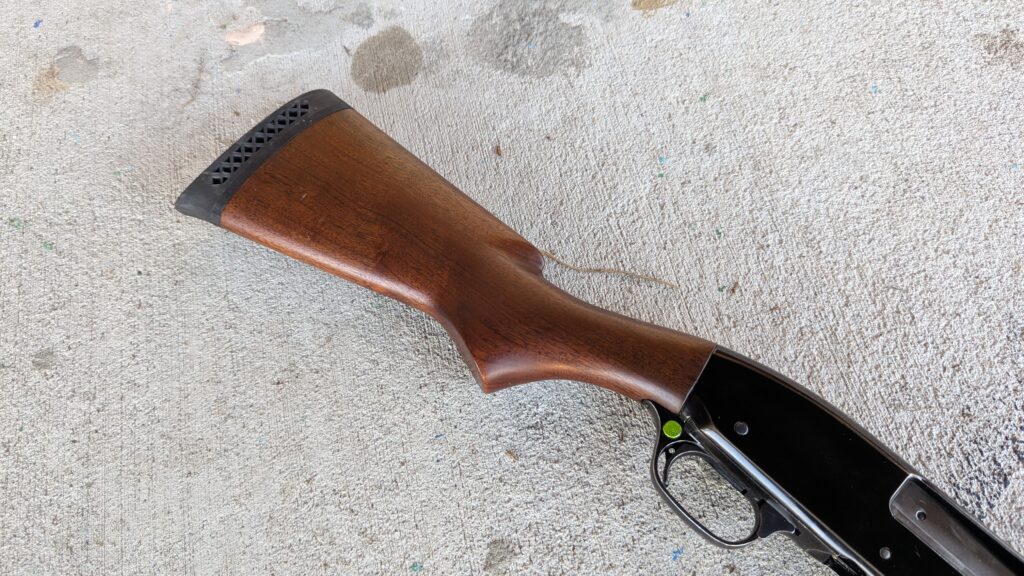
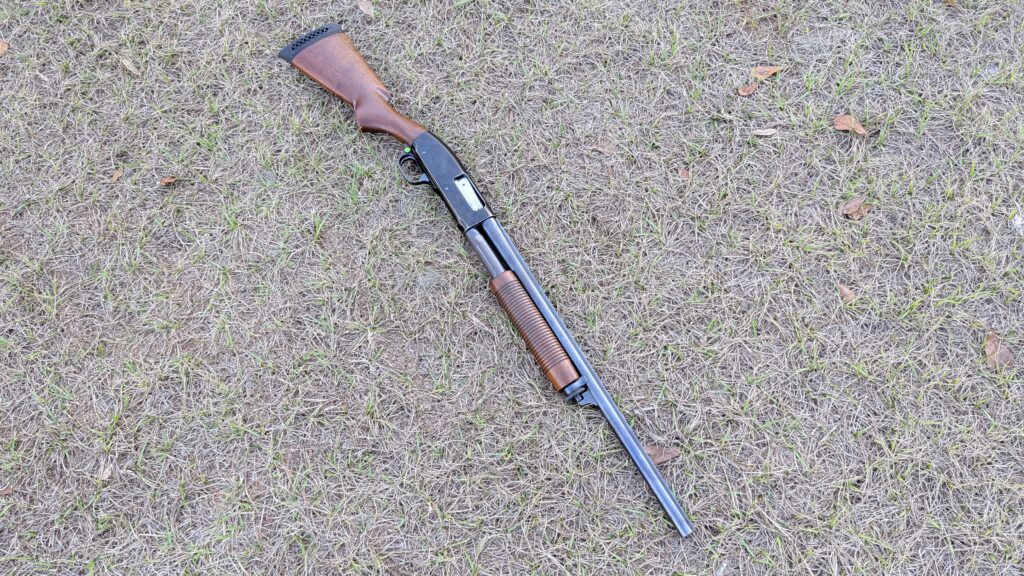
My Model 31 is a 20-gauge variant. A previous owner professionally shortened the barrel and the stock, creating a very lightweight, handy firearm. It feels as though it was originally modified for a youth or smaller-statured shooter. While it has been trimmed and slimmed, it remains an excellent example of “Big Green’s” history of manufacturing.
Advertisement — Continue Reading Below
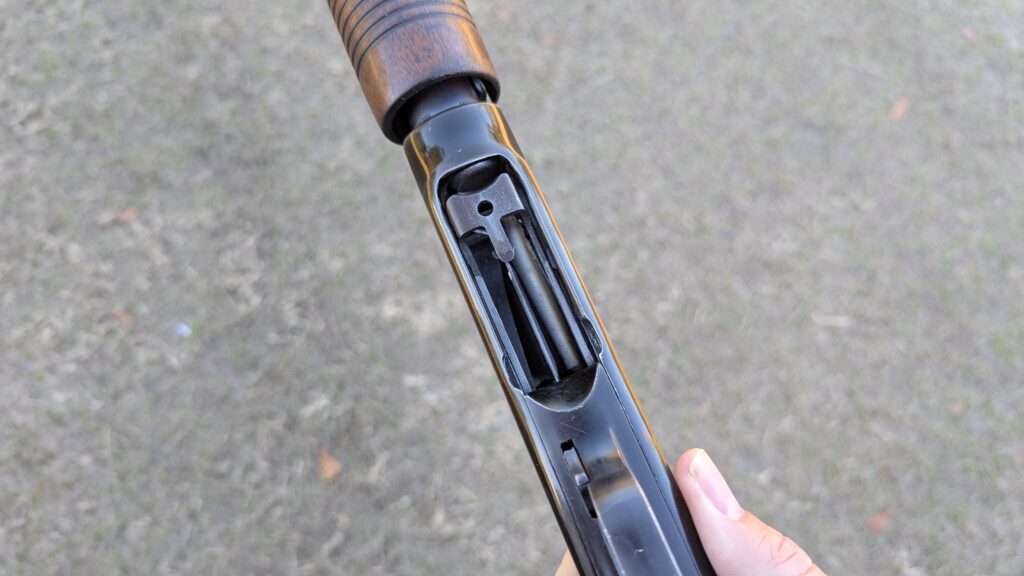
The walnut furniture is gorgeous; for a gun old enough to collect Social Security, the wood and the deep blued finish are a testament to its original quality. However, to truly feel the magic of this gun, you only need to rack the pump. It is, by far, the smoothest action I’ve ever felt. It glides rearward and forward, completely free of slop or grit.
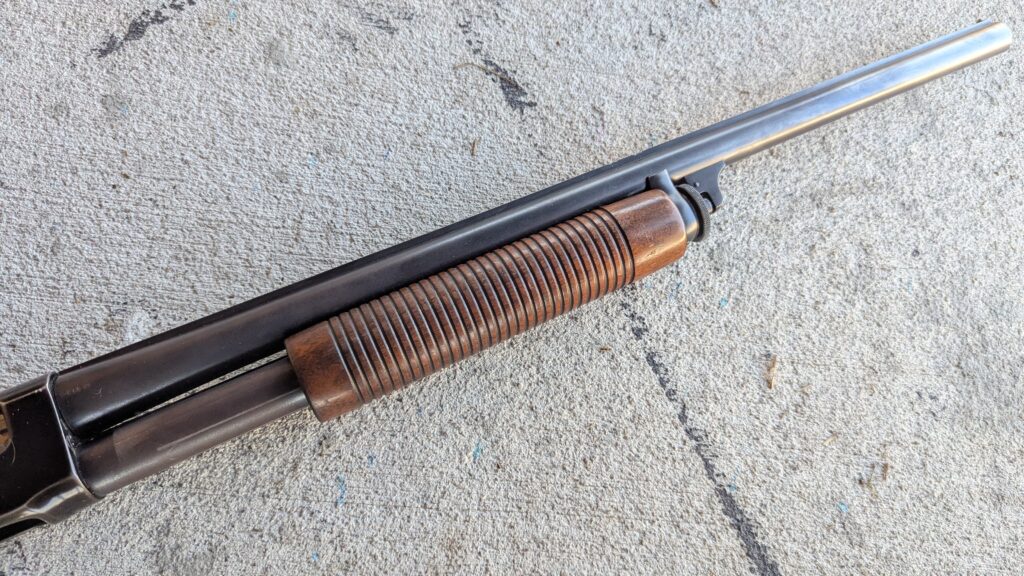
This buttery movement is why the Model 31 became known as the “Ball-Bearing Repeater.” It feels as if the action bars are sliding on actual bearings rather than steel-on-steel. This is the result of precise machining and hand-fitting—a level of craftsmanship we rarely see in modern mass-produced shotguns.
Advertisement — Continue Reading Below
Of course, this was also why the gun was a tough sell: it was expensive to produce and required significant man-hours. When people say, “They don’t make them like they used to,” the Remington Model 31 is exactly what they are talking about.
The Model 31 at the Range
This shortened 20-gauge model might be the handiest pump-action I’ve ever shot. It’s lightweight, short, and produces very little recoil. Despite being a “sub-gauge,” the 20-gauge round still packs a potent punch, making it a capable choice for both defense and hunting. For many shooters, it’s the “Goldilocks” of shotgun rounds.
The smooth action makes it easy to “grip and rip.” You can cycle the gun incredibly fast, and with the low recoil, the experience is immensely satisfying. The Model 31 can put two rounds on target at ten yards in less than a second without punishing your shoulder.
Advertisement — Continue Reading Below
Even with basic buckshot, it performed surprisingly well. Despite the cut barrel, it produced a decent group—roughly the size of my palm at ten yards with “el-cheapo” loads. When I switched to Federal FliteControl, the patterns tightened up beautifully. The gun provides consistent extraction, ejection, and firing without a single complaint. It may be an old workhorse, but it still has plenty of “get-up-and-go.”
The Legacy of the Model 31
The Model 31 wasn’t a massive commercial success for Remington. Its primary rival, the Winchester Model 12, had a reputation as the “Perfect Repeater” that was hard to overcome. Remington produced approximately 121,000 units in 12 gauge, and about 75,000 in 16 and 20 gauge combined.
Advertisement — Continue Reading Below

However, the Model 31 paved the way for the future. It inspired Remington to develop the Model 870, which was optimized for modern, cost-effective manufacturing. This allowed the 870 to be sold at a much lower price point than the Winchester Model 12, eventually allowing Remington to seize the market share.
This shift even forced Winchester to produce the cheaper 1200 series. Additionally, Mossberg used the Model 31 as inspiration for the Model 500 series, which remains one of the most popular shotguns in the world today.
Advertisement — Continue Reading Below
The Model 31 may not have been the king of the sales floor in its day, but its legacy is firmly cemented in blued steel and walnut.
Advertisement — Continue Reading Below
Read the full article here