
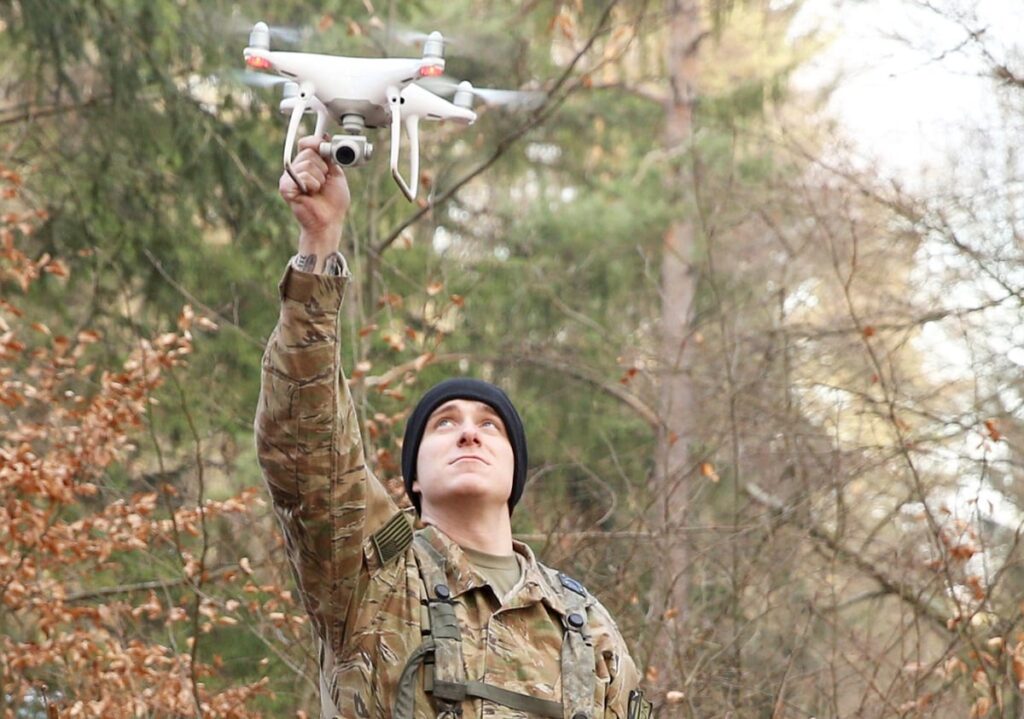
The first use of small, commercial-grade drones seems to trace back to Iraq. Who used them first is up for debate. ISIS became known for using these mini, toy-like drones to deliver explosives, but CAG, a.k.a. Delta Force, also fielded drones to fight ISIS. While we don’t know who did it first, we know that small, remote-controlled drones aren’t going anywhere anytime soon.
The Ukraine War is, without a doubt, one of the bloodiest modern conflicts in recent times. The use of drones, including hobbyist-grade toys, is dropping bombs, acting as kamikaze drones, and ruling the skies over battlefields. It’s completely changed the battlefield, and the American military and the rest of NATO have taken note.
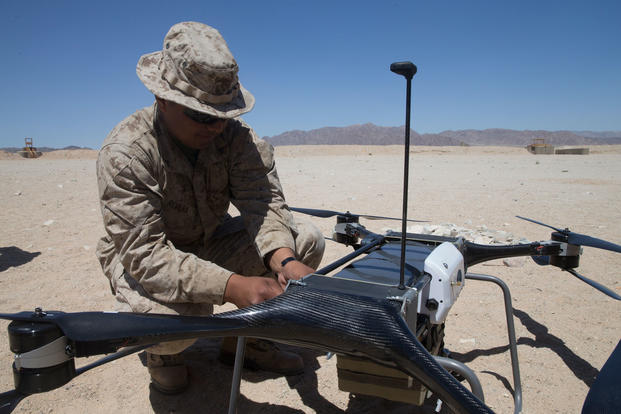
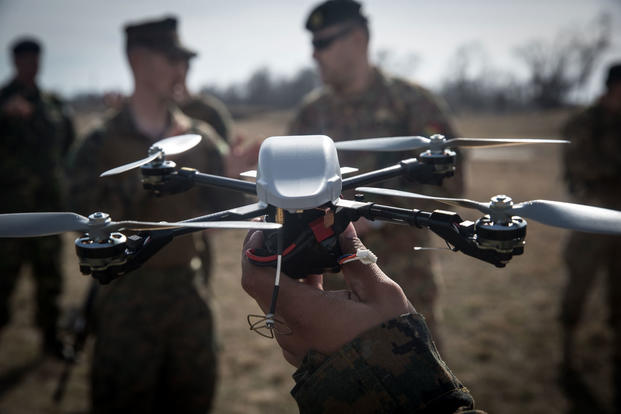
These micro-sized remote-controlled killing machines have democratized the battleground. Aviation support no longer has to be an expensive, high-ticket product that’s always in short supply. A kid with an iPad can become an anti-armor, anti-personnel, anti-everything weapon. The Marine Corps has even formed its own team and demonstrated how cheap and effective these drones can be.
Advertisement — Continue Reading Below
Cost and Performance Analysis
A Javelin costs a quarter of a million dollars to fire. That’s just the missile cost. These tank killers provide an anti-armor option to an infantry force. It also weighs 49 pounds in a ready-to-fire configuration. The Marine Corps Attack Drone Team can field a 5,000-purpose-built UAV to do almost the same thing.
The Javelin will be more effective against a modern piece of armor, but we can’t ignore that soldiers in Ukraine have effectively disabled armored vehicles with remote-controlled UAVs. The Javelin can track a target and attack from different angles, and so can a remote-controlled drone.
If we move from armor to personnel, the drone becomes extremely effective. They can drop ordnance or be ordnance. The whirling vulture of death can effectively engage personnel well outside of the range of the standard infantry rifle. It’s become the new sniper rifle for engaging threats at extended ranges while the user is concealed.
Advertisement — Continue Reading Below
There has been this big push, mainly by the U.S. Army, to field rifles that offer soldiers enhanced ranges and provide overmatch. SOCOM and the Marine Corps are looking at the .338 Norma Magnum in a machine gun to do the same thing. If we are looking to extend the range of our infantry forces, then the unmanned, remote-controlled drone will be a valuable part of that equation.
Unlike a rifle or machine gun, the mini UAV doesn’t require precision aiming or marksmanship skills. Piloting these things is fairly simple, and they close on the enemy before attacking, meaning you don’t need optics, lasers, range finders, or marksmanship skills. Just find the enemy on the camera and go.
Advertisement — Continue Reading Below
The Drone As a Sniper Rifle
What’s a sniper’s job? Be concealed, be able to infiltrate at ranges beyond the normal infantry squad, and be able to make precise hits at extended ranges. The drone can do all of that. I’m not arguing for replacing the sniper, but simply pointing out that for infantry forces, a UAV can meet some of those same requirements.
A sniper is more precise, has less of a risk for collateral damage, and isn’t affected by counter-UAV methods. If you need to rescue hostages like Captain Phillips, you need a sniper. If you want to target a machine gun nest, a bunker, or an enemy camp, toss a drone at it.
Advertisement — Continue Reading Below
Here’s the real question: if you’re dealing with a sniper, wouldn’t a drone be one of the best options for counter-drone forces? You don’t have to blanket an area with machine gun fire and missiles. Turn thermal on, throw the little murder hummingbird up, and find the attacker.
The Marine Corps Attack Drone Team is developing tactics and techniques for infantry forces to field these devices. This will effectively expand an infantry force’s range to up to over 10 miles. A single squad with a few drones can observe and attack enemy forces at much greater ranges, which will change the battlefield as a whole.
It’s going to limit the maneuverability of everyone and create a need for counter-UAV specialists in every squad. These devices will offer both attack and reconnaissance capability. When I was much younger and cooler, getting a Recon drone for support was often difficult, with one allotted to an AO with three platoons operating.
Advertisement — Continue Reading Below
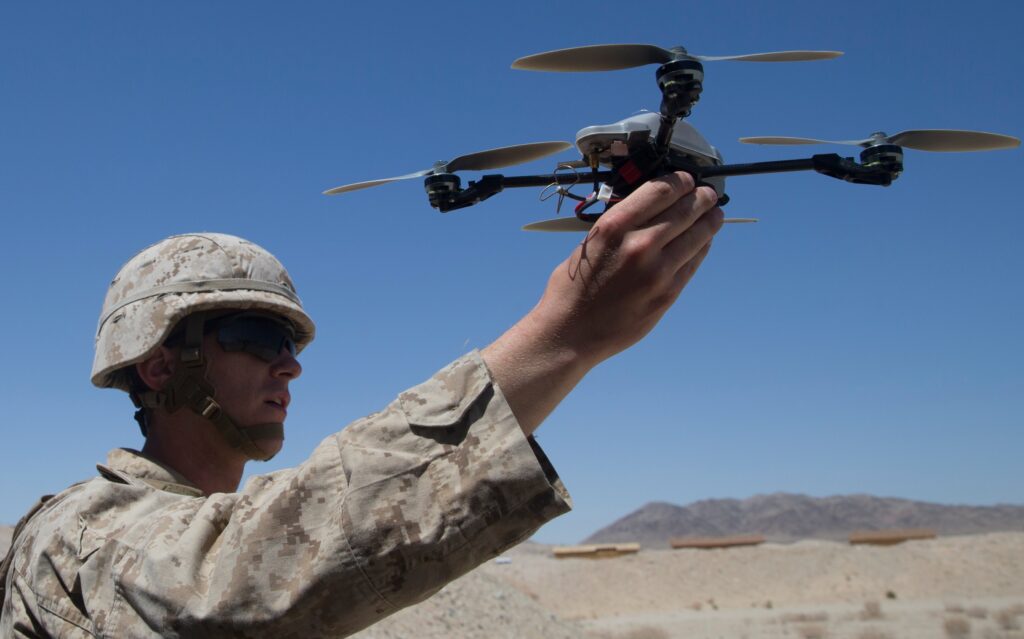
Having that asset organic to the infantry can extend their range, lighten their load, and at the same time be cost-effective.
Counter-Drone Specialists
Another big change will be the need to develop counter-UAS capability within the infantry, armor, artillery forces, and practically any combat arms job. This has ranged broadly with a multitude of anti-UAS methods.
Advertisement — Continue Reading Below
We’ve seen high-tech scramblers that kill the signal between drone and operator. Those are easily defeated by the fielding of tethered drones that have a direct connection to the controller.
Shotguns are making a big comeback amongst NATO forces. Companies like Benelli are producing specialized variants of their shotguns as counter-drone weapons. As a doomscroller, I’ve watched some skilled shotgunners take down drones with sporting guns in Ukraine on Instagram.
Advertisement — Continue Reading Below
These devices are fragile and lightweight. A single pellet of fairly large birdshot can disable one if it’s placed correctly. Hitting the rotors will create instant pilot issues. Other low-tech solutions include nets strung between buildings to force the drones to fly high and make them easy targets.
The Army’s small purchase of FN 30mm grenade launchers offers counter-UAV potential. The airburst and proximity fuse munitions offer greater range and potential than a shotgun. Devices like the Israeli-made SMASH 2000L, a smart scope designed to mount to a rifle and track drones as they fly.
Advertisement — Continue Reading Below
This optic will provide a ballistic solution to hitting the drone and not allow the weapon to fire until the computer determines the best time to fire. The Marine Corps is currently experimenting with the SMASH system, and it’s being fielded by Israeli forces.
With the rise of AI targeting, it won’t be long until drones can counter drones, and that will likely be one of the more effective ways to deal with these buzzing birds of death.
A New Battlefield
I’m proud to see the Marine Corps lead the way in fielding and countering this surprisingly effective and efficient technology. It’s going to change the battlefield, and we can’t be caught on our back foot.
Read the full article here