

I grew up in the era of the survival greats like Ron Hood and John “Lofty” Wiseman, and the long‑blade culture that shaped my early fieldcraft. Big knives grabbed my attention and never let go. They still earn a place in winter camps when most folks reach for an axe. I run a few heavy hitters I call cold-weather long blades because they carry weight, heart, and the kind of authority frozen wood respects.
Why Long Blades Shine in Winter
Cold weather tightens wood fibers and hardens knots. Small blades skate, bounce, or stall. Longer knives solve that problem with reach, momentum, and geometry. A weight‑forward chopper drives into frozen grain without forcing you to swing harder. The longer edge spreads impact across a larger surface area, reducing binding and giving each cut a cleaner track.
Winter also rewards simplicity. Gloves stay on, daylight fades fast, and every tool swap slows you down. A long blade handles splitting, carving, notching, and food prep without forcing you to dig through your kit. One tool keeps the firewood flowing and the camp chores moving.
Advertisement — Continue Reading Below
Technique Differences Between Axes and Long Blades
Axes rely on mass and a wedge shape. You lift, drop, and let the head do the work. The edge enters the wood, the wedge spreads the fibers, and the handle stays neutral. Axes reward vertical power and straight‑down strikes.
Long blades rely on edge length, speed, and follow‑through. You swing with a slicing arc instead of a pure drop. The belly carries momentum, and the edge tracks through the cut. You guide the blade more than you muscle it. When you baton a long blade, you control the split with precision—something axes rarely offer. Axes dominate heavy rounds. Long blades dominate versatility. In winter, that versatility keeps you warm, fed, and efficient.
TOPS Knives Storm Vector
The Storm Vector channels old‑world SEAX lines with modern TOPS muscle. A long, sweeping edge drives through frozen rounds and stubborn knots. The spine carries enough mass for controlled power strokes, and the handle locks your grip even with gloves or numb fingers. The blade’s forward bias gives each swing authority without forcing you to muscle every cut.
Advertisement — Continue Reading Below
The Storm Vector runs 18 inches overall with a 12.5‑inch blade, a 12‑inch cutting edge, and a 0.24‑inch spine. It weighs 1 pound 8 ounces and carries a 5.5‑inch handle. TOPS heat treats the 1095 steel to 56–58 HRC, giving the long SEAX profile the backbone winter work demands.
Benefits
Advertisement — Continue Reading Below
- Weight‑forward geometry delivers deep bites in cold, dense wood.
- A slight forward cant keeps the blade impacting before the hand arrives.
- Long edge length supports slicing, splitting, and food prep without tool changes.
- SEAX heritage creates a natural feeling of adventure when chopping.
- TOPS heat treat holds an edge through winter abuse and baton work.
- MSRP: $360.00
Fun Facts
The Storm Vector draws from Anglo‑Saxon war blades. That lineage gives it a natural “snap” in the cut—something you feel when the edge tracks straight through frozen grain.
TOPS Knives A‑Klub
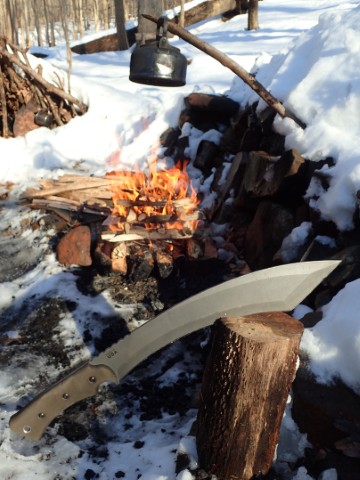
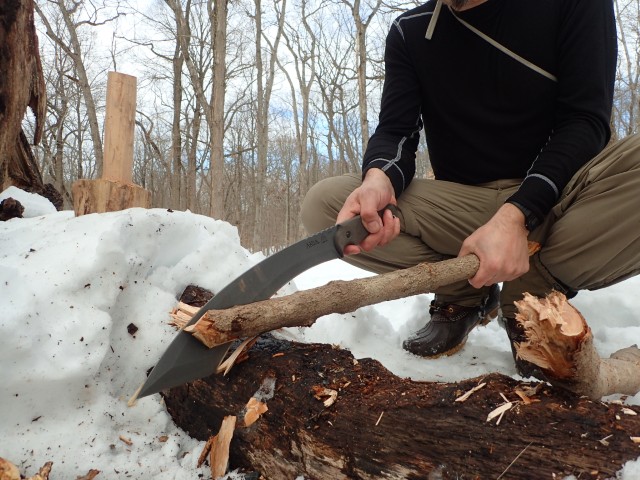
Amanda Kaye shaped the A‑Klub as a camp chopper with attitude. The blade carries a club‑like presence—thick spine, heavy nose, and a chopping sweet spot that rewards a relaxed swing. The handle geometry encourages a high grip for control or a low grip for reach and power. In winter camps, the A‑Klub punches through icy rounds without hesitation.
Advertisement — Continue Reading Below
The A‑Klub stretches 17.875 inches with a 12.375‑inch blade, a broad 2.5‑inch face, and a quarter‑inch spine. It weighs 1 pound 7.8 ounces and runs 1095 steel at 56–58 HRC. The 5.5‑inch handle anchors the heavy nose and gives the chopper its club‑like authority.
Benefits
Advertisement — Continue Reading Below
- Thick spine and heavy nose generate momentum with minimal effort.
- Broad edge handles splitting, scraping, and rough camp tasks.
- Ergonomic handle supports multiple grips for precision or power.
- Tough 1095 steel shrugs off cold‑weather brittleness.
- MSRP: $410.00
Fun Facts
Amanda designed the A‑Klub after years of real‑world camp work. The blade feels like a hybrid between a small axe and a machete—perfect for winter chores when you want power without the bulk of a hatchet.
Advertisement — Continue Reading Below
Knives by Hand Survival Kukri
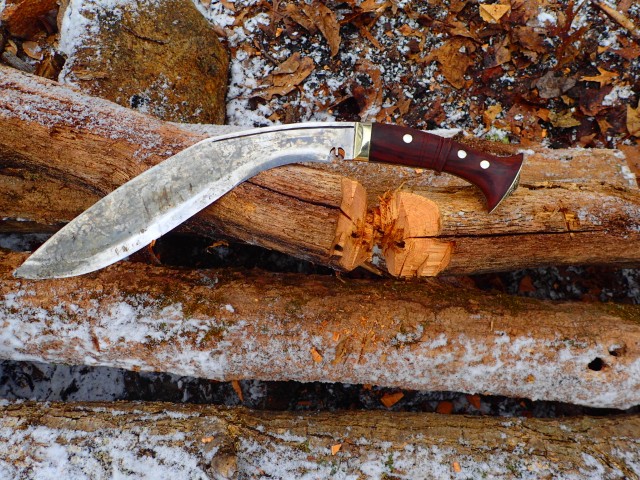
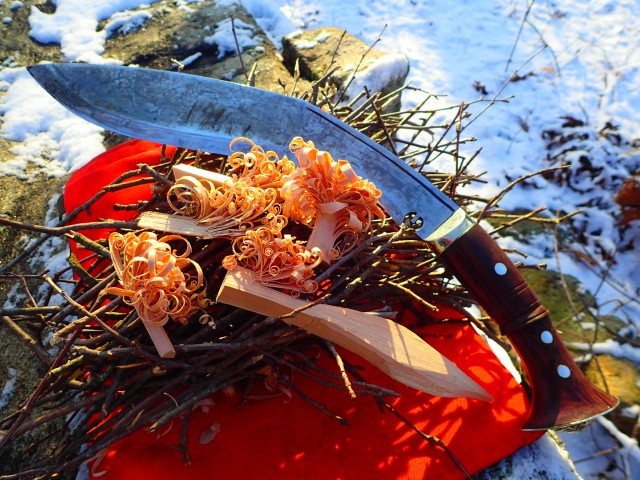
A true Nepali‑forged kukri carries soul. The Survival Kukri from Knives by Hand follows traditional forging lines—thick spine, curved belly, and a chopping sweet spot that hits like a compact axe. The forward curve drives the edge into wood with surprising efficiency. In cold weather, that geometry shines because the blade wants to bite without extra force.
The Survival Kukri measures 17 inches overall with a 12‑inch blade and a whole quarter‑inch spine. It weighs 28 ounces and uses traditional leaf‑spring steel with a rosewood handle. The hand‑forged build gives the kukri its lively swing and classic Nepali balance.
Advertisement — Continue Reading Below
Benefits
- Classic kukri curve creates natural chopping leverage.
- Preferred Kukri by Alan Kay, Alone: Season 1 winner.
- Hand‑forged spine and distal taper balance power with control.
- Wide belly excels at splitting, carving, and food prep.
- Traditional craftsmanship gives each blade a unique character and field presence.
- MSRP: $169.00
Fun Facts
Nepali smiths hammer these blades in small shops using time‑tested methods. That hand‑forged feel gives the kukri a lively swing, almost like the blade guides your cut.
Advertisement — Continue Reading Below
Closing
Cold Weather Long Blades carry real winter value. They cut, split, and keep the camp running when the cold stiffens everything else. Trust the reach, swing with purpose, and let the steel work.
Read the full article here